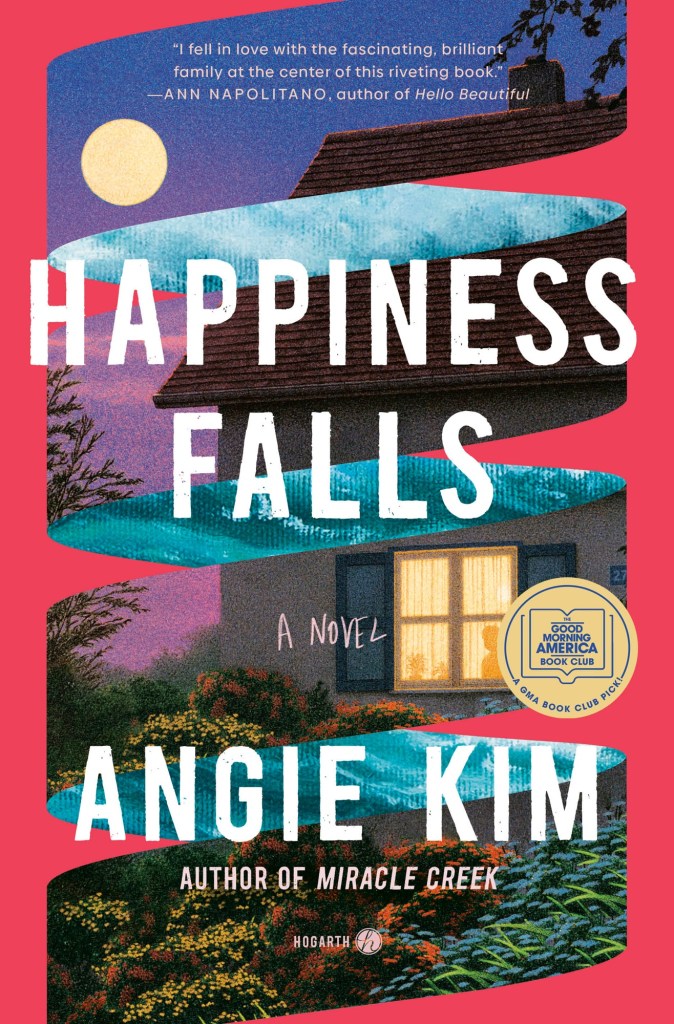
About the book
BOOK SUMMARY
When a father disappears during a family outing, his wife and children are left to piece together what happened. As the investigation unfolds, long-held secrets surface and the family is forced to question how well they truly know one another.
Published 2024
Mystery
400 pages
Great mystery, terrible science
January 26, 2026
I actually really enjoyed this book for the most part. Most of the criticisms I’ve seen scrolling through reviews are either about not liking the narrator (self-righteous, arrogant, irritating), or thinking the story moved too slow (random side tangents, constant over explaining).
I did not have either of those problems. I enjoyed the first-person narration. I enjoyed hearing her meandering thoughts and her explicit, careful analysis of individual events. I liked the highlighted psychology studies. I also thought the mystery was engaging with an enjoyable pace. The characters felt extremely real and believable to me. The dialogue, the family dynamics, the cultural and gender challenges, the decisions made – all felt very smooth and natural.
My problem was with the depiction of certain treatments for non-verbal autism and Angelman Syndrome. The conditions themselves seemed well represented in the beginning. Descriptions of the nuanced impact these diagnoses had on Eugene’s parents and siblings were well done. But then key elements of the story relied on the efficacy of pseudoscientific treatment methods that seem harmful to be promoting (methods based on the Rapid Prompting Method and the Spelling to Communicate Method, according to the Author Note). The novel’s resolution relied on dishonest depictions of the extent and methods by which individuals with these diagnoses (especially Angelman Syndrome) can process information and communicate. It may make for an exciting ending to a novel, but it is just not representative of actual scientific evidence. The somewhat open-ended conclusion was also a little bit bizarre to me given the circumstances.
 kelsi’s reading diary