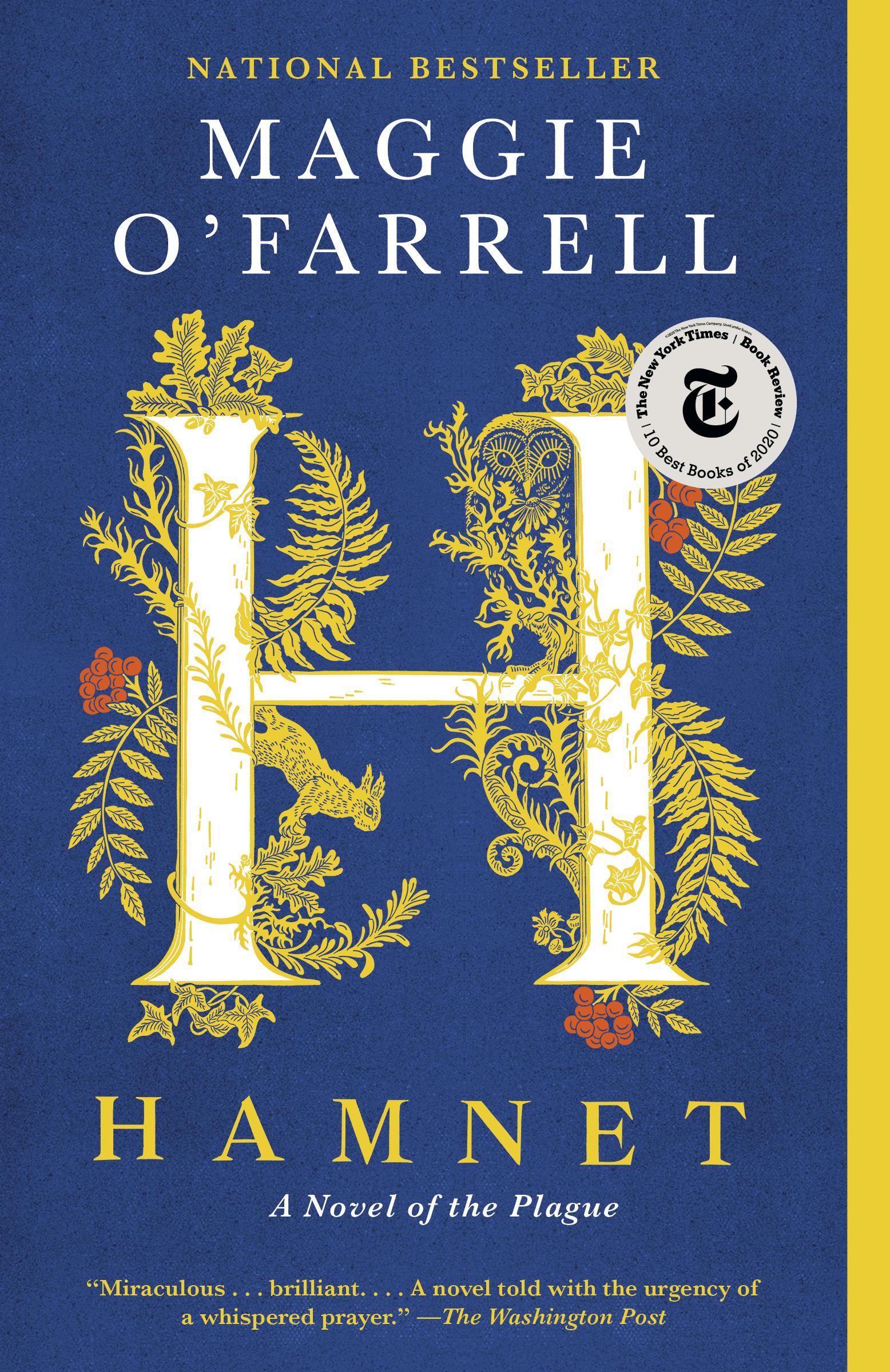
About the book
BOOK SUMMARY
In 1580s England, a Latin tutor falls in love with a gifted healer. Their marriage faces devastating loss when bubonic plague strikes their twins, inspiring one of literature's greatest masterpieces.
Published 2020
Historical Fiction
372 pages
Every other sentence becomes a list
April 22, 2026
This certainly was not a bad book, but I can’t help but feel like it got a lot more prestige than it otherwise would have had it not been associated with Shakespeare. For me it was just okay. I appreciated the portrayal of grief and womanhood. I especially liked how certain passages were written, like the journey of the fleas that brought the plague. I liked the decision not to name Shakespeare. On the other hand, there were a number of things I wasn’t as excited about.
First, although I do appreciate all the imaginativeness O’Farrell introduced into what sparse historical details we have about Shakespeare’s life, a couple of core plot elements made the story feel overly contrived and sentimental. I didn’t love the somewhat magical element of how Hamnet took on the plague in place of his sister. Also, Hamlet as a play honestly does not make sense as something that would be inspired by the death of or written in tribute to a child, so I think that took away some of the intended emotion in the final scene for me.
Second, I’m torn on the alternating timeline structure. I feel like this strategy is used too often these days to compensate for society’s declining attention span. Like authors are worried we won’t be invested enough if they just tell a single story straight through, so we have to keep shifting gears to increase the entertainment value, like a sitcom. Maybe the alternating timelines here did help focus the story on Hamnet, but I think overall the story would have been more effective had it been told chronologically. (Update: it turns out the movie version was done chronologically, and I did like it better that way.
And lastly, the writing itself. I enjoyed it at first, but it started to feel formulaic after a while, and it wore me down. Specifically, O’Farrell has a habit of concluding an excessive number of sentences with a series of nearly synonymous verbs or adjectives, separated by commas. There are places where this kind of repetitive structure is effective, but when I can’t open a page without spotting multiple examples, it becomes really distracting. It makes the writing feel bloated and indecisive, like the author just can’t decide which word fits best. Every other sentence becomes a list. It has become one of my biggest pet peeves in recent books. For instance:
“It feels enormous, significant, bigger than him.”
“She will need to be quick, quiet, wily.”
“The wind caresses, ruffles, disturbs the mass of leaves.”
“…the place so quiet, so black, so empty.”
“It seems to refer to the ghost, the dead man, the departed form.”
 kelsi’s reading diary