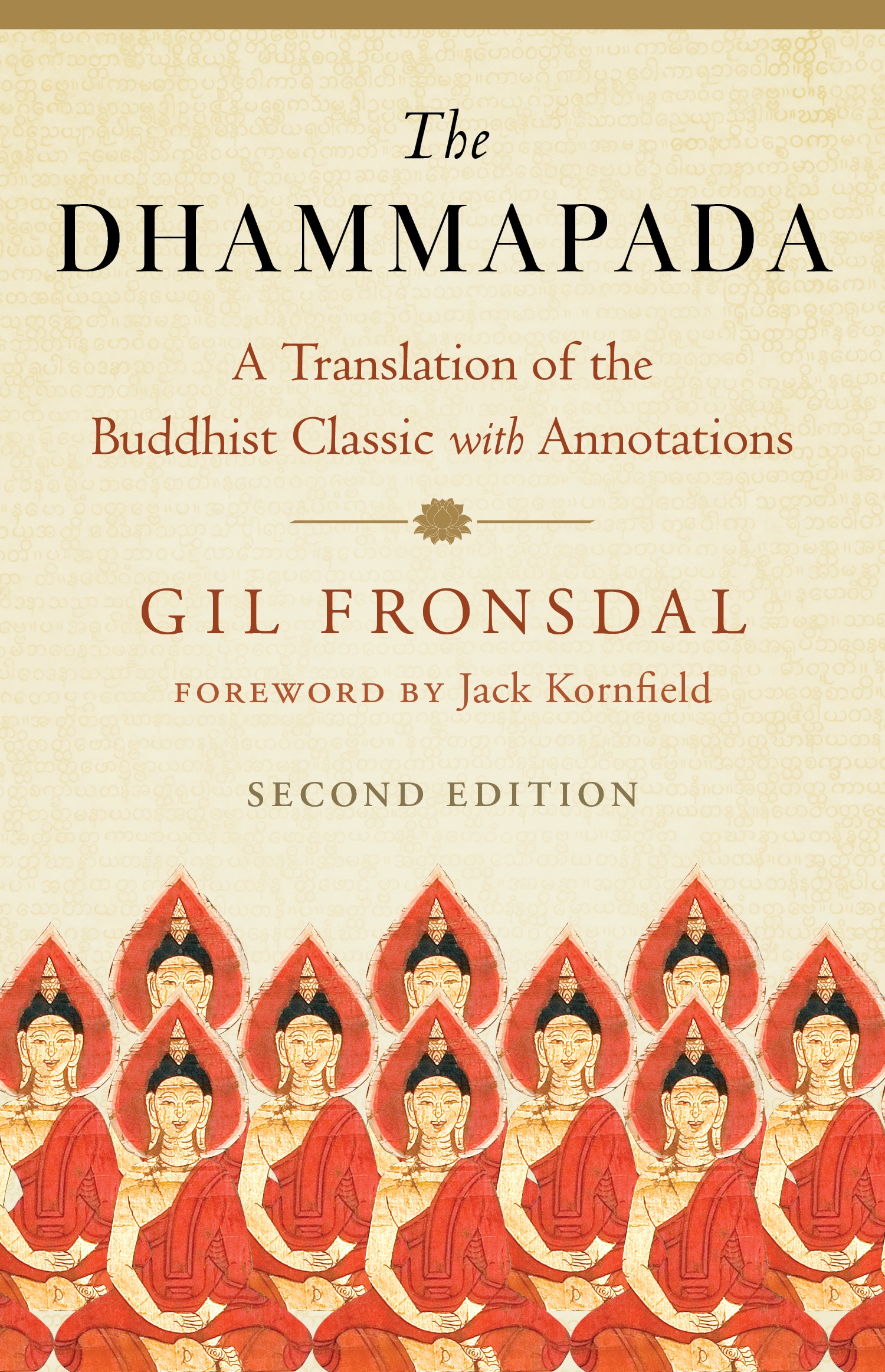
About the book
BOOK SUMMARY
A collection of sayings of the Buddha in verse form and one of the most widely read and best known Buddhist scriptures.
Published 5th Century BCE
Religion
176 pages
Stoicism with a little Jesus
May 18, 2026
Reading The Dhammapada with only a limited understanding of Buddhism felt a little like reading the book of Proverbs with no prior concept of Christianity or the rest of the Bible. It is a collection of brief, concentrated teachings, and I read it in one quick sitting, even though it seems much better suited to slow, ongoing, meditative study.
There were plenty of quotable moments of wisdom, but the book mostly left me with more questions about how the broader Buddhist framework is supposed to work. I understand, at least in theory, the idea that craving, passion, and attachment lead to suffering. But is the end of suffering really meant to be the highest goal? Doesn’t suffering also deepen or amplify joy? And while I can see the value in freeing the mind from regret about the past and anxiety about the future, I kept wondering how practical or realistic that is for an ordinary person living an ordinary life.
As I read, I was trying to compare to some of the other religious and philosophical texts I’ve been reading. There are certain concepts that align nicely with Christianity. For example, lines like, “Best among humans is the tamed person who endures verbal abuse,” fits in with Jesus’s guidance to turn the other cheek. Or lines like, “As a beautiful flower, full of color but without fragrance, even so, fruitless are the fair words of one who does not practice them,” sound like Jesus’s warnings against performative righteousness.
But I think the differences between Buddhism and Christianity are summed up nicely in the intro of my edition of Gil Fronsdal when he explains that the Bible emphasizes “God’s role as Creator and, by extension, our reliance on God’s power,” while the Dhammapada emphasizes “the power of the human mind in shaping our lives, and the importance and effectiveness of a person’s own actions and choices.”
If I were to pick a better comparison, the Dhammapada reminded me less of Christianity and more of Stoicism. Lines such as, “Do not consider the faults of others or what they have or haven’t done. Consider rather what you yourself have done or haven’t done,” sound like they could have come straight out of Marcus Aurelius’s Meditations. Although there’s a little bit of Jesus in there too, to be honest.
 kelsi’s reading diary