About the book
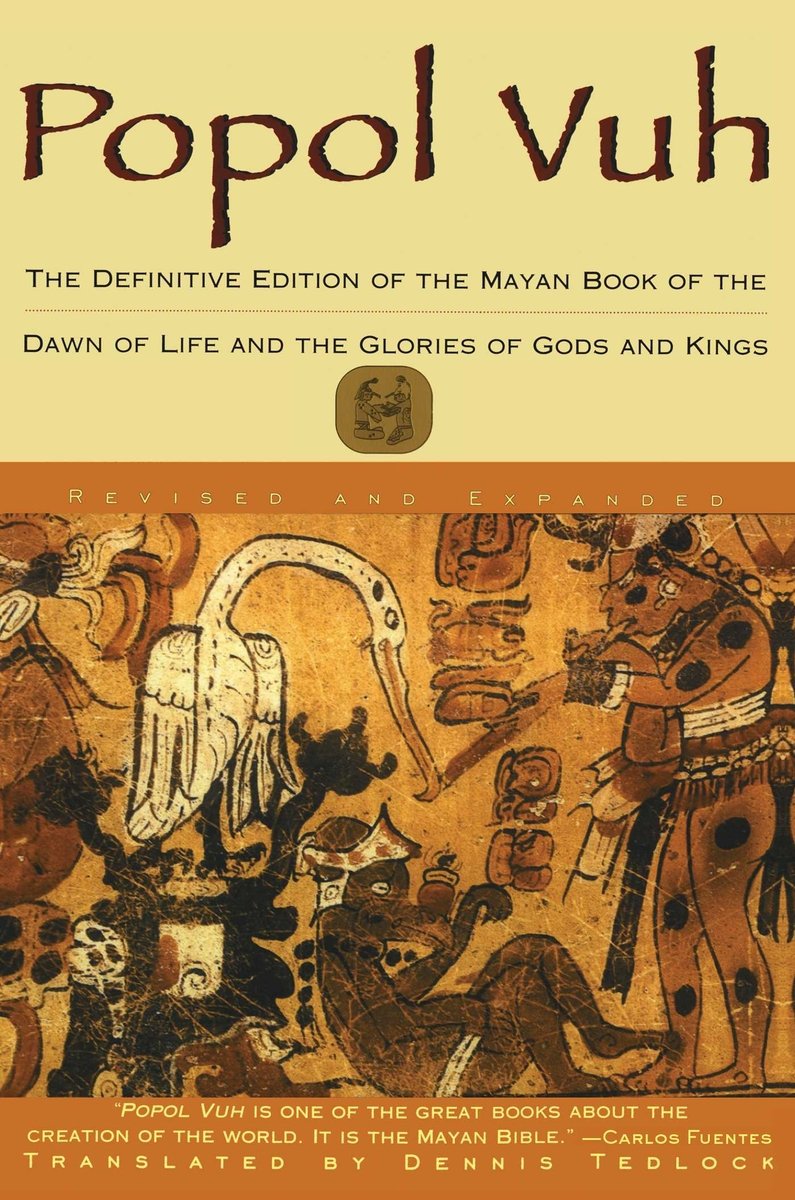
BOOK SUMMARY
Ancient Quiché Mayan sacred text presenting creation mythology, from primeval darkness through divine deeds to the founding of the Guatemalan highlands kingdom.
Published c. 16th century (written form)
Ancient Myth
384 pages
Maize people and gods who experiment
May 22, 2026
Reading ancient literature from other parts of the world had me wondering what was happening in the early Americas. I’ve been interested in how differently written language developed across continents, and how much that affects what survives as “ancient literature.” It’s unfortunate that Europeans destroyed so many Indigenous written records and artifacts so we only get to see little bits and pieces of the full mythology.
I liked seeing the parallels and differences between the Popol Vuh and other ancient texts. For example, the creation story in the Popol Vuh is similar to Genesis in that both begin with darkness and emptiness, both present the creation as occurring in stages as an act of divine power, both make humans the pinnacle of the creation story, both feature a type of “fall” or loss of godlike knowledge, and both include a flood-like destruction.
On the other hand, Genesis has one single God creating the world, while the Popol Vuh has multiple gods who experiment, fail, and try again. Humans are not made from dust, but from maize. The motivation behind “the fall” also differ between the two stories. In Genesis, humans fall by gaining forbidden knowledge, while in the Popol Vuh, the first humans lose their full knowledge and abilities because they know too much. The Popol Vuh also feels much more anthropomorphic than the Bible, with less strict boundaries between humans, animals, gods, and the natural world.
 kelsi’s reading diary