About the book
BOOK SUMMARY
The teachings of Jesus Christ and the development of early Christianity.
Published 1611 (KJV translation)
Religion
1,548 (full edition) pages
Jesus’s message, then Paul’s theology
May 30, 2026
My initial quest to become more well-read has sent me down a deep rabbit hole of religion and world history that keeps getting deeper. The New Testament is far from an unfamiliar text to me, and yet the more I tried to understand it from a literary and historical perspective, the more I realized how little I knew. And this was still a pretty quick read-through.
First, a little summary of the structure, which I don’t think I would have been able to explain clearly even a few weeks ago.
The New Testament begins with the four Gospels: Matthew, Mark, Luke, and John. These are narratives of Christ’s life, teachings, death, and resurrection. Then comes Acts, which tells the story of the apostles’ ministry after Christ.
Next are the thirteen books from Romans through Philemon, traditionally attributed to Paul. These are letters to churches or individuals that explain Christ’s message and address specific issues in early Christian communities. Several of these letters are widely believed by scholars to have been written by later followers of Paul rather than by Paul himself.
After the Pauline letters come Hebrews and the other general epistles, many of which have uncertain or debated authorship. And lastly comes Revelation, an apocalyptic vision about God’s victory over evil.
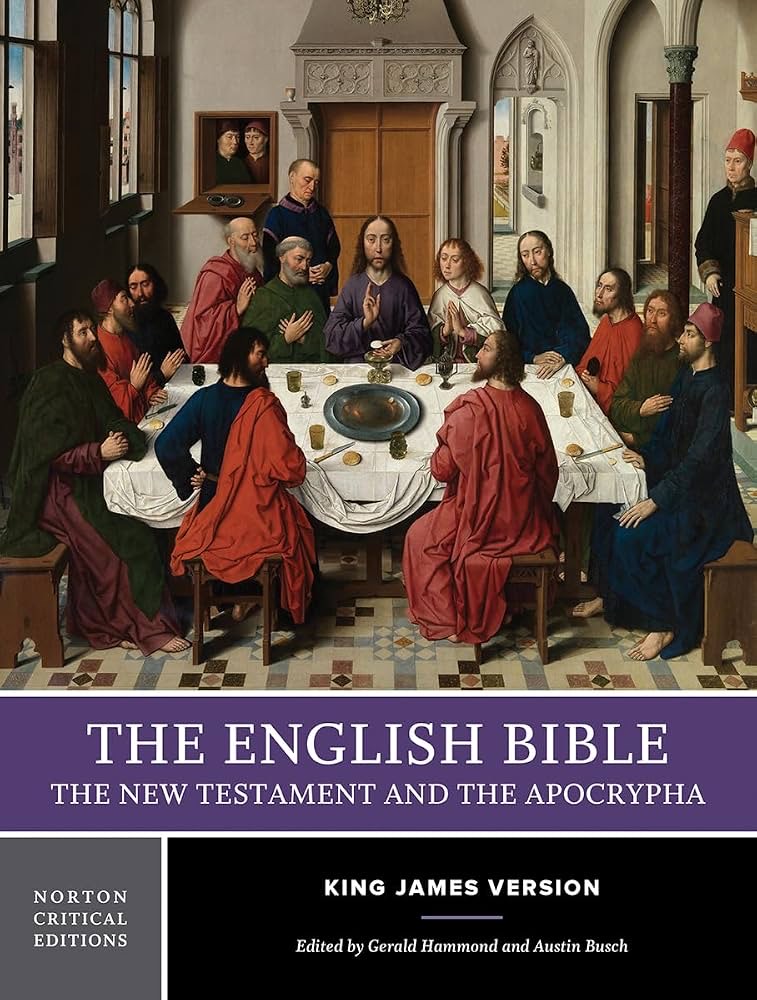
Reading the Norton Critical Edition of the New Testament, which includes helpful introductions, essays, and contextual notes, I learned a lot of things I either didn’t know before or had forgotten. I’ll share some of my thoughts on the Gospels, Acts, and the Pauline letters on the next slides.
The Four Gospels + Acts
There are a few key things I’ve learned about the Gospels and Acts. First, the Gospels themselves do not name their authors. They have traditionally been attributed to Matthew, Mark, Luke, and John, but many scholars believe they were probably not written directly by eyewitnesses to Jesus’s life. More likely, the stories were aggregated from various oral testimonies and previous written records.
Second, I learned more about how the Gospels appear to have been composed. Matthew and Luke include much of the same material found in Mark, which would indicate that Mark was written first. The most common view is that Matthew and Luke both used Mark as a source, along with another shared source that no longer exists, while also adding material unique to their own accounts. John, meanwhile, likely came last, and it is quite different in both style and content. It includes different stories, a different structure, and overall different vibes.
And third, I learned more about the timeline of things. The Gospels and Acts were likely written decades after Jesus’s death, and Paul’s letters come earlier than any of the Gospel accounts. That means the earliest Christian writings we have are not narratives of Jesus’s life, but letters that were already trying to articulate the ultimate meaning of his life, death, and resurrection.
It’s not much of a hot take, but there really is a lot of good stuff in Jesus’s teachings. The most fascinating part is reading his sermons and realizing how far mainstream Christianity has often strayed from his core message. The key teachings are basically: love your enemies, forgive endlessly, avoid religious hypocrisy, recognize that wealth is spiritually dangerous, blessed are the poor, and those with power should serve others. It doesn’t seem like modern Christianity is always emphasizing the right things, especially when politics gets involved.
I will say, though, that some of his parables seem kind of silly if I think too hard. For example, when he talks about a shepherd losing a sheep and asks who wouldn’t “leave the ninety and nine in the wilderness and go after that which is lost?” As if it’s a no-brainer to go rescue the one lost sheep. Uh, I, for one, certainly wouldn’t leave my 99 other sheep unattended to go out searching, that just sounds like a great way to lose more sheep. I’ll add some thoughts and summaries for each book on the next slide, because it’s really interesting to compare and contrast.
The Four Gospels + Acts, cont.
Matthew – Matthew is probably my favorite of the four, because it contains a good mix of narrative about Jesus’s life and extended sections of his teachings. It is organized around five major teaching discourses: (1) the Sermon on the Mount; (2) instructions to the twelve apostles as they go out to preach and heal; (3) a series of parables about the kingdom of heaven; (4) teachings on humility, forgiveness, and life within the community of believers; and (5) a final discourse about judgment, watchfulness, and the end times.
Mark – Mark is much briefer and feels like more of a summary of the highlights. It does not include as much detail of Christ’s teachings, nor does it discuss his birth or childhood like Matthew and Mark do.
Luke – Luke feels like the most comprehensive biographical with clear narrative arc, from Jesus’s birth and childhood, to the preparation for his ministry, his ministry in Galilee, his journey to Jerusalem, his teaching in the temple, his arrest, crucifixion, burial, and resurrection. It does not organize Jesus’s teachings into the same kind of formal extended discourses as Matthew, but it still contains many of Jesus’s most familiar teachings and parables.
John – John has a completely different style from the other three Gospels. It does not offer the same kind of full biography of Jesus’s life, nor does it include as much content from his actual teachings. Instead, it focuses more on the theology of Jesus as Savior using stories involving a lot of signs and symbols. Jesus seems more aware and accepting of the crucifixion in John than in the other Gospels, where there is more emphasis on his agony. John is also noticeably more explicit and negative in its language about “the Jews” than the other books.
Acts – Acts is basically Luke Part 2. It picks up where Luke leaves off, following the spread of the early church, including the conversion and missionary work of Saul, later known as Paul, in spreading the gospel message to gentiles as well as Jews.
The Pauline Letters
Reading the four Gospels felt like I was getting a lesson in spirituality, compassion, humility, forgiveness, and the kingdom of God. But moving on to Paul’s letters felt much more like I was getting a lesson in theology and organized religion, and I didn’t find it quite as uplifting.
As a reminder, Paul was originally a Pharisee who had persecuted the early church until he believed he received a call from God to preach the message of Jesus to the gentiles. Paul’s letters are not presented in chronological order, but instead by length, from longest to shortest. So Romans is the longest and most comprehensive.
What’s interesting is realizing how much of Christianity as we know it today comes through Paul’s interpretation of Jesus. Although the Gospels do give meaning to his death, Paul is the one who most explicitly develops the theological significance of Jesus’s death and resurrection. He states very clearly that Christ died for our sins, that salvation comes through faith and grace, and that Gentile believers do not need to follow the full Jewish law in order to become part of God’s people.
Paul has been criticized for his commentary on women, sexuality, and slavery. He talks about how women should remain silent and not teach or exercise authority over men, that women should keep their heads covered and that slaves should obey their masters. And when people talk about the bible being against same-sex relations, most of the New Testament reference points come from Paul.
On the other hand, Paul also acknowledges quite a few women by name at the conclusions of his letters, and he seems to respect their active participation in his missionary work, which feels notable for the time. He also has this surprisingly inclusive statement in Galatians 3:28: “There is no longer Jew or Greek, there is no longer slave or free, there is no longer male and female; for all of you are one in Christ Jesus.” So I don’t know. I’ve got a whole other book about Paul on the way in the mail, so more to come.
 kelsi’s reading diary