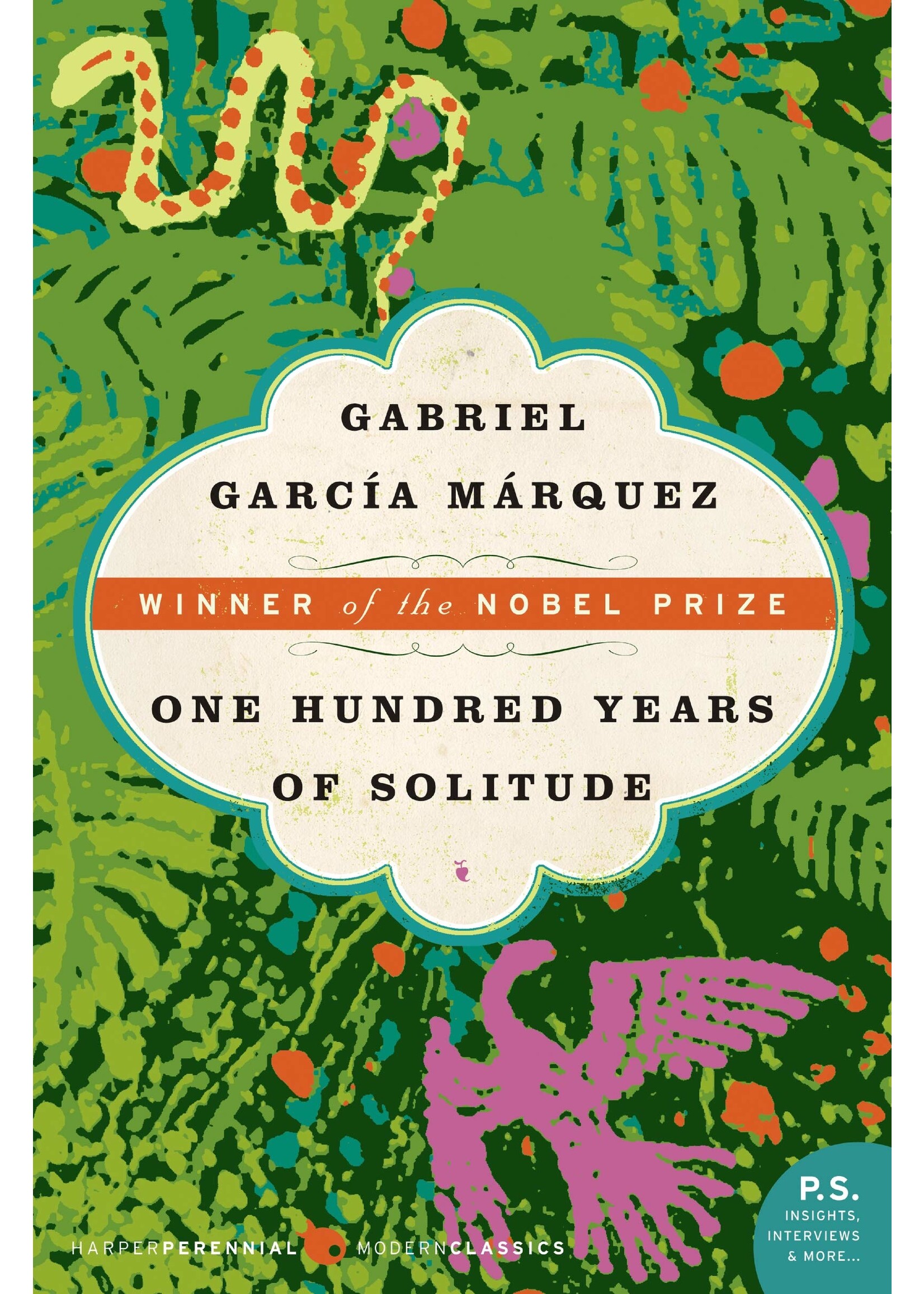
About the book
BOOK SUMMARY
A multi-generational saga chronicling the mythical town of Macondo and the doomed Buendía family, blending realism and fantasy.
Published 1967
Magical Realism
417 pages
Happy to get lost in magic
June 27, 2026
I procrastinated writing this review because I wanted to do it justice. But now I’ve read several more books since this one, and I feel even less well equipped to write a good review. In any case, I thought this book was truly incredible.
Even though I wasn’t completely sure what was going on half the time (partly because there are only like six unique names for dozens of different characters), I was happy just to get lost in the magic of the writing. The prose is so intricate and ornamental and straight-up weird, it had me wondering how García Márquez came up with this stuff, while also being comforted that AI could never.
The magical realism was so fun and chaotic. I loved reading passages about the most bizarre and impossible scenarios being told with total sincerity, as if they are just ordinary facts of life. Scenes like Remedios the Beauty ascending to heaven, the insomnia plague, and the OG José Arcadio casually being left tied up to a tree for decades are great examples. I don’t claim to be an expert in Latin American culture, but something still felt perfectly Latin American about this type of storytelling.
I also loved how the book portrayed the cyclical nature of time. The novel begins and ends with images of a child with a pig’s tail, and names and personalities are repeated across multiple generations. Everyone seems doomed to repeat some version of the same mistakes and obsessions.
And all of that barely even touches on the brilliance of the book’s deeper historical and political layers about colonization, modernization, and collective memory. The seemingly meaningless civil wars, the forgotten banana plantation massacre, and Aureliano’s fate to endlessly make little gold fishes in exchange for gold coins, only to melt them down and start over again, are just a few scenes that demonstrated these themes. The whole thing was a treat to read.
 kelsi’s reading diary