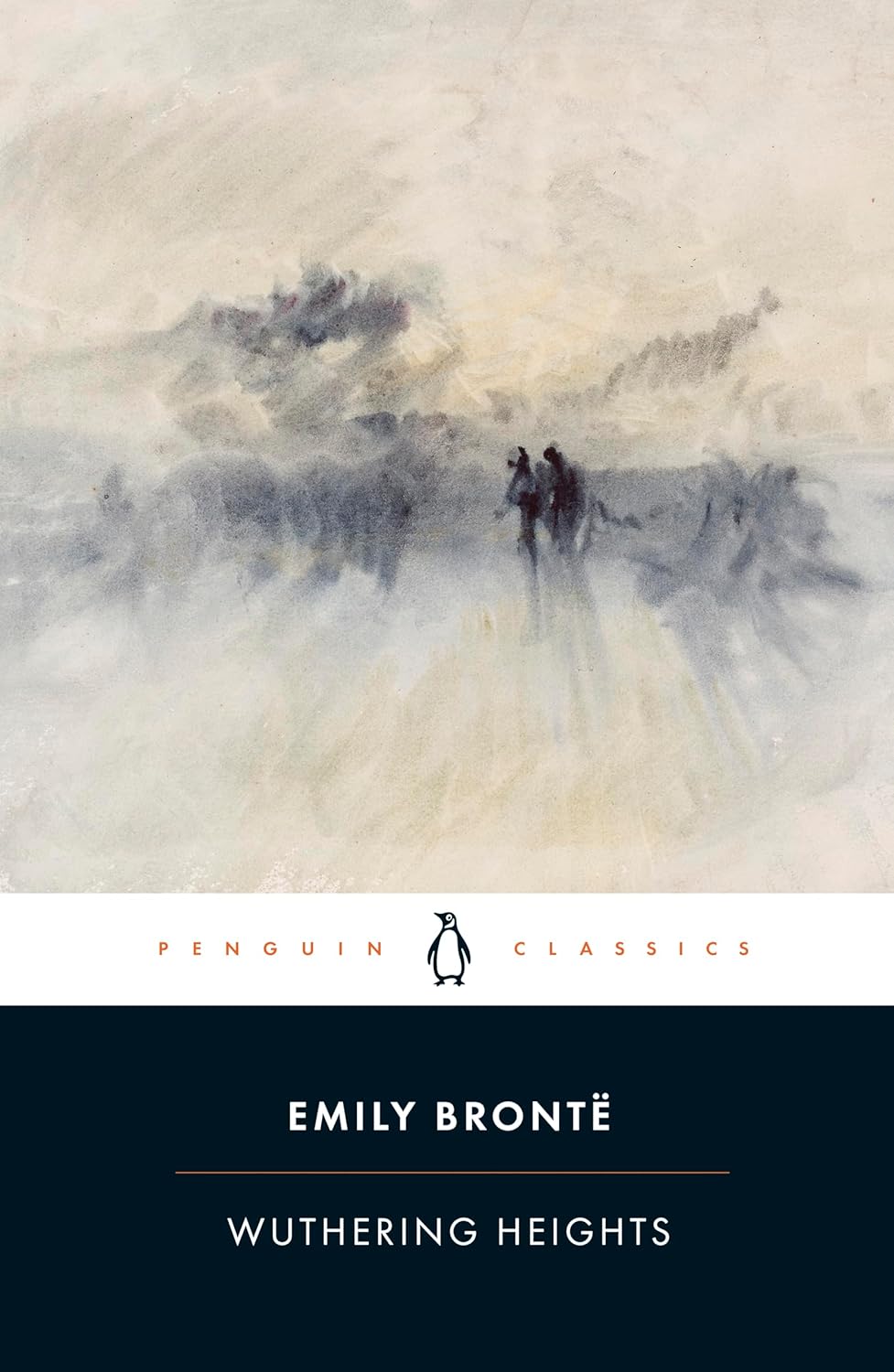
About the book
A wild, destructive love between Catherine Earnshaw and Heathcliff poisons two generations on the late 18th-century Yorkshire moors.
Published 1847
Gothic Romance
359 pages
Humans are complicated. Emotions are messy.
February 21, 2026
There is something so badass about a story this unflinchingly savage and morose being published by a young woman more than 175 years ago in polite Victorian society. Intense emotions bleed from every element of the prose. And the feelings are mostly unpleasant.
It is impressively tightly written for such a sprawling and complicated epic, thanks in part to its clever story-within-a-story structure. That layered storytelling was such a highlight for me. Being able to walk in on Wuthering Heights mid-story from a stranger’s point of view was a perfect way to preview how wild things were about to get. We were never invited into the story; we knew the whole time that we were outsiders looking in at the freak show taking place.
I think the most disorienting thing about this book isn’t even the vulgarity of the characters, though. It’s the fact that you finish the book without a clear idea of what the takeaway is supposed to be. There are no distinct heroes or villains, no definite moral clarity, no happy romantic ending. Which in and of itself, might kind of be the takeaway: humans are complicated. Emotions are messy. That said, I documented some of the other messages I took from the story:
- No amount of money and status and care guarantee contentedness if we are stripped of key aspects of our identity.
- Trauma is enduring and multi-generational, but it does not guarantee our destiny.
- Environment matters more than blood in determining the outcome of our character (but still does not guarantee our destiny).
- Revenge doesn’t solve your problems.
- Enforcing restrictions based on class and heritage has widespread negative consequences.
- Intensity and possessiveness is not the same as love.
- It is critical for our sanity that we venture beyond our own homes every once in a while and communicate with folks a little farther removed from us than first cousins and household servants.
 kelsi’s reading diary