About the book
BOOK SUMMARY
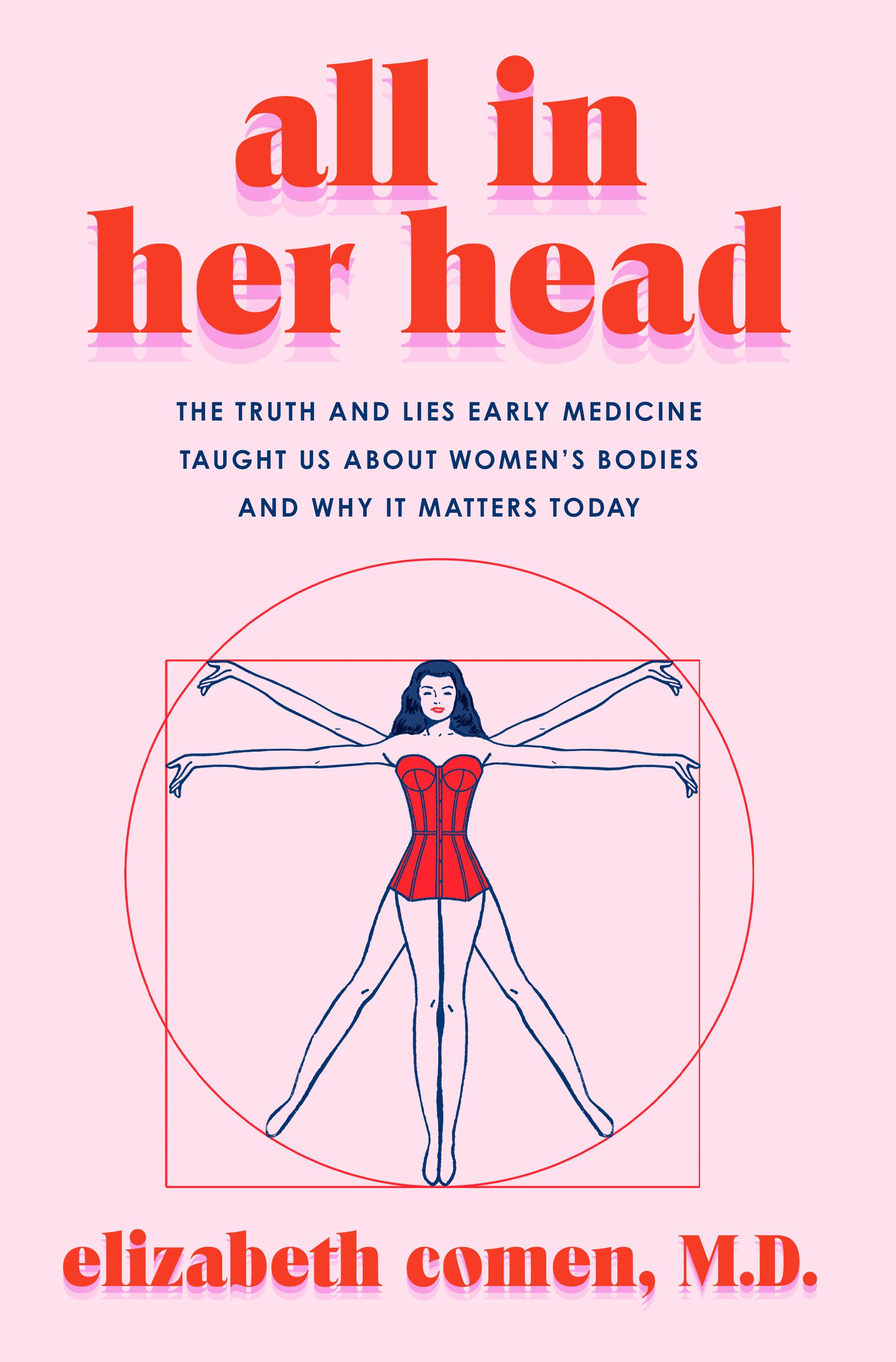
A history of women’s medicine, including the actual doctors and patients whose perspectives and experiences laid the foundation for today’s medical thought and the many oversights that still remain unaddressed.
Published 2024
Medical History
368 pages
This is going to be a rant
March 11, 2026
This book got me all sorts of worked up, so what I type here may end up being less of a “review” and more of a rant. To summarize, it is a well-researched account of the history of how women have been studied (or not studied), diagnosed, and treated in the medical system, organized across eleven organ systems.
If you’ve read Invisible Women by Caroline Criado Perez, or any other materials on this topic, you know that it’s a frustrating one. And even if you haven’t read much about the history of women’s medicine, chances are you’ve seen some of the less fortunate outcomes: Cancer that went undiagnosed for far too long because reports of pain weren’t taken seriously or because symptoms were brushed off as normal symptoms of pregnancy. Heart attacks that were dismissed as symptoms of stress or anxiety (women are 50% more likely than men to receive an incorrect initial diagnosis after a heart attack). Autoimmune disorders that went ignored because symptoms didn’t fit into a clean diagnosis.
So much of the general message told through healthcare is that men are the norm, and women are deviations from the norm. As such, it is only natural for women to suffer from a number of ailments that would be taken more seriously if they were men – aka, the norm.
This framing is perhaps the most clear in the Endocrine and Reproductive systems of this book, where the disparate treatment of men’s and women’s health issues is especially apparent. There is a complete dearth of research on, or even acknowledgement of, the impacts of menopause on women, and the sexual experience of women was mostly ignored outside of reproduction. Women suffering from menopausal symptoms or uncomfortable or unsatisfying sex? Normal. Probably psychosomatic. Deal with it. Unless, of course, it impacts their husbands, in which case we’ll take a closer look, still catering our research to the needs of men. Meanwhile, men experiencing erectile dysfunction or other symptoms of hormonal changes as a result of aging? Not normal. All hands on deck.
Although a lot of progress has been made over the decades, the world of medicine seems to be an area where women still fall far short of equal treatment. Historical stigmas about women’s health are difficult to overcome, and closing the gap in research on men’s health versus women’s health takes a lot of time and money that is dependent on a sufficient amount of political will.
I thought the whole thing was very well done. My only critique would be about the presentation of somewhat conflicting ideas. There were passages deriding the foolish historical assumptions about women being different from men, such as times when it was thought that women shouldn’t ride bikes or run long distances, or times when certain foods were judged to be specific to women. On the other hand, there were plenty more passages about how the differences between men and women were not sufficiently acknowledged in medical research, diagnosis, and treatment. I don’t disagree with any of the author’s conclusions, I just wish she had done a better job of connecting the dots and creating a clear distinction between baseless stereotyping and evidenced-based biological difference.
One other comment is that for a book about the history of women’s medicine, black women in particular should have gotten a little more acknowledgement for serving as less-than-willing test subjects for a lot of early medical breakthroughs and who continue to be disproportionately overlooked in healthcare.
On a more personal note, this book made me feel all sorts of angry because too many sections hit way too close to home.
In the Blood section, I read, “[she] had spent her whole life with such heavy periods that she was soaking through five pads per day…she simply assumed it was normal”, and I thought: Only five pads?? Because it wasn’t until a few months ago that I discovered via ChatGPT that not being able to make it an hour without switching out my tampon is not normal, and I still can’t believe literally no one had ever asked me about it before, despite repeatedly reporting relevant symptoms.
In the Nerves, Breathe, and Blood sections, I read stories of woman after woman having their health issues dismissed or misdiagnosed as psychiatric disorders when there was actually an underlying physical condition that needed to be addressed, and I thought: That is me. I have a long history of experiencing debilitating daytime fatigue, which became worse after pregnancy and has now also developed into spells of dizziness and lightheadedness, embarrassing shortness of breath, and recurring nausea. All I’ve ever been given is psychiatric drugs. No one ever looked deeper into a possible physical root cause, until very recently when I started pushing hard for it.
In just about every single section, I read stories of women being blamed for their own health issues, citing hysteria or biological weakness, and I realized that this thought process is completely ingrained into how I see myself. Any time I feel unwell, my immediate first question is whether it is all in my head. Am I lazy? Am I weak? Am I just out of shape?
When I finally brought my chronic health concerns to a new doctor, I came prepared with a multi-page synopsis of my health history and thorough documentation of my efforts to improve via ongoing lifestyle habits: I drink plenty of water, I eat a healthy macro-balanced diet, I get good exercise but not too much, I emphasize step-count and sunlight, I get an appropriate amount of sleep, etc. etc. I also brought an extremely thorough blood panel that I had obtained independently and the results of some other at-home orthostatic testing that the internet suggested I try. All to prove that it wasn’t in my head and I had tried my best to fix it. And now I’m just thinking: I never would have thought to do any of that if I were a man.
 kelsi’s reading diary