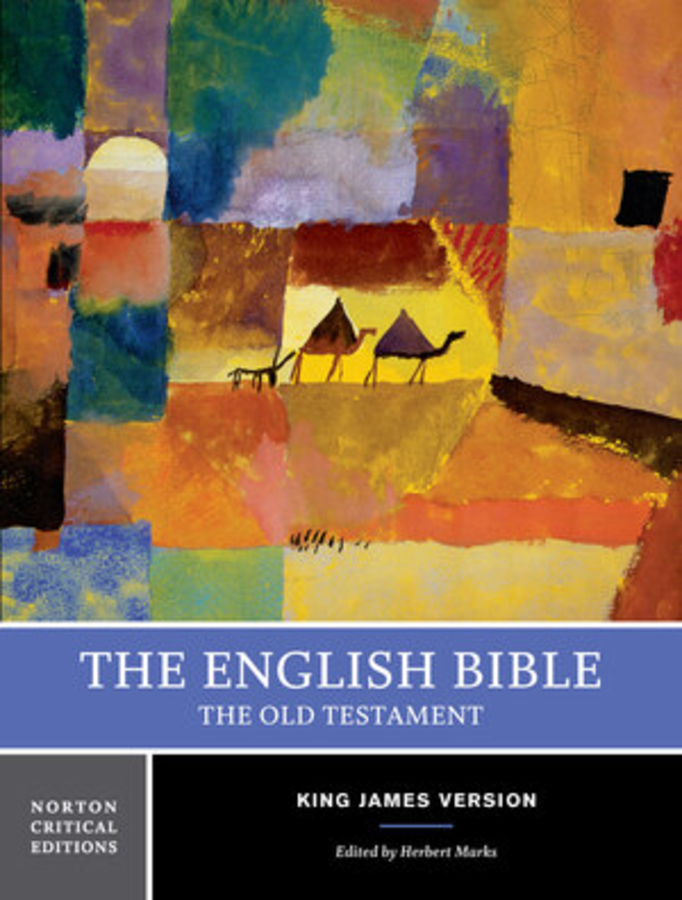
About the book
BOOK SUMMARY
Genesis; Exodus; 1 & 2 Samuel; Job; Psalms; Isaiah
Published 400 BC
Religion
2304 pages
The women are missing
April 18, 2026
As part of working my way through ancient texts, I wanted to attempt to read select books of the Old Testament (listed on the previous slide) as continuous works rather than in short segments for religious study. My goal was to approach the text from a more objective literary perspective instead of the religious lens I am more familiar with.
To be clear, I am not a bible expert. I don’t have anything new and fresh to add to the conversation. However, I think it’s a gift to be able to contemplate and document my own independent thoughts, so that’s all I’m doing. These are quick(ish) summaries that I put together after the fact, and I feel like they are barely scratching the surface in some areas, but I only have so much time to dedicate to typing into the void.
I really did not intend to go into this read of the bible with such a strong feminist perspective, but it quickly seemed unavoidable. My main takeaway, especially from the first couple of books, was that it’s a wonder girls are able to grow up having all these bible stories repeated to them and walk away with at least a subconscious feeling of being “less than”.
Just try reading the Old Testament while keeping in mind the question, “where are the women?” They are not the main characters, they are not praised for their growth and learning, they are rarely even acknowledged. They appear only as side characters in the lives of men, often valued for their wombs alone, ignored and dismissed despite hints of moments of greatness, raped and abused with little acknowledgement, used as pawns and prizes in political negotiations, and regularly used to represent sin and temptation.
All that aside, it was really interesting to read these select books right after reading a lot of classic Greek literature and see the similarities in style and themes. It’s interesting to me that the Old Testament really does not seem far off from the Greek epics and tragedies in terms of the presence of big mystical events, chosen heroes, and the unpredictable influence of the gods (except we’ve now transitioned to monotheism). And yet the bible remains the foundation for the world’s biggest religions, while the Greek stuff is just silly old myths ancient people used to believe.
GENESIS
We start with Genesis, which is legitimately a super compelling read. This is where we get all the classics: the creation and fall, Noah’s ark, Abraham and Isaac, Joseph in Egypt. The two overarching thoughts I had throughout Genesis were: (1) wow, God sure seems to be pretty arbitrary about who he decides to bestow his blessings upon and when; and (2) either the bible was written by men, or God has no respect for women.
First, here are a few of the examples of God’s decisions that lack clear moral explanation (without forcing a deeper religious interpretation about how we do not have all the knowledge of God):
God accepts Cain’s sacrifice over Abel’s. This seems to be the beginning of a long pattern of unexplained favoritism.
Noah and his family were somehow the only people worth saving from the flood.
Noah curses Canaan, when it was Canaan’s dad who messed up. Or really Noah himself who messed up.
Abram/Abraham seems to be the chosen one out of nowhere, even though Abraham acts pretty uncool on several occasions.
God inexplicably chooses Jacob over Esau before they are even born (“the older shall serve the younger”).
Second, here are some examples of women being treated as less than fully developed humans, as vessels of wickedness, or as mere plot devices to further a man’s story:
On multiple occasions Abraham pretends Sarah is his sister rather than his wife in order to protect himself, even though it puts her in more danger.
Hagar is used for her womb and then tossed aside.
Lot offers his daughters to an angry mob in order to protect his male guests (reminder that Lot is supposed to be the righteous one in Sodom). Later, they are presented as rapists of their father, rather than the other way around, which I have a hard time buying.
Lot’s wife is used as nothing but a warning symbol, even though it seems like Lot himself made far bigger errors.
Jacob has four different baby mamas, three of which only seem to be valued for their reproductive capacity.
EXODUS
On to Exodus, where we’re still in the exciting parts of the bible. Once I had already started reading with my modern, feminist lens, it was hard not to keep noticing the same themes I picked up on in Genesis relating to God’s arbitrary selection of chosen people and the overall dismissiveness towards women.
On a grand scale, it’s still not entirely clear why God promised to make the Israelites his chosen people. Sure, Pharaoh is pretty awful, but the text repeatedly says that God is the one who hardened Pharaoh’s heart, like it wasn’t even Pharaoh’s choice. The Israelites also show plenty of disobedience and seem to receive a lot more forgiveness. And is Pharaoh a fair representation of all Egyptians? Why are all Egyptians getting punished for Pharoah’s abuse of power? And more broadly, what does God have going on in China or Africa or Americas, for example? Any chosen people over there?
Within the Israelite people, why is Moses the chosen leader? Again, it seems less like individuals are being rewarded for their actions and more like the story is driven by predestination. Moses gets the central role, even though Aaron does a lot of the speaking and public-facing work. When I read this part when I was younger, I was inspired when God helped Moses work through his poor speaking skills. I can still see that perspective, but I can also imagine Aaron feeling a little taken for granted.
And with Moses getting all the main-character treatment, we once again have the issue of women being reduced to plot devices, even though their actions make the entire story possible. Moses’s mother gives birth to him and keeps him safe. The Hebrew midwives defy Pharaoh’s orders. Pharaoh’s daughter rescues Moses and helps raise him. And Moses’s sister brings Moses and his mother back together. With the limited detail we have, it seems like the women in the story were the ones who acted with the most bravery and immediacy.
In summary, Exodus is another solid read, but I think it takes a lot of creative interpretation to find any clear moral logic in God’s actions within the story. It still feels very much like the Greek epics and tragedies of a similar time period, where a god picks favorites and manipulates humans to suit his will.
1&2 SAMUEL
Skipping ahead a few books, we get to Samuel. I think some of the big religious lessons commonly taken from all the books up to and including 1&2 Samuel are that God keeps his promises, God rewards obedience, and God works through imperfect people. That’s one defensible reading. But similar to Genesis & Exodus, the thing that stood out to me the most across the books of Samuel is the pattern of women being overlooked or suffering collateral damage from the actions of the men around them.
First, we have Michal, the younger daughter of Saul. She loves David, but Saul uses her as bait in an attempt to get David killed. David survives, and Michal ends up marrying him. But then David goes on the run and Saul hands her off to another man, Palti. Later, David demands Michal back as part of his political negotiations, with Palti weeping as she is taken away. These negotiations happen without Michal, and we do not get to hear much about how she felt about being used as a pawn.
Then we have Abigail and Ahinoam, two more women David marries while he is on the run from Saul. We hear very little from Ahinoam, but Abigail actually gets a speaking part when she courageously talks David down from slaughtering Nabal’s household in anger. Later, it is mentioned almost in passing, as part of David’s leadership journey, that Abigail and Ahinoam are taken captive and eventually recovered. Abigail shows clear wisdom and courage in the part of her story we do get to hear, but David gets glory and Abigail gets unacknowledged suffering.
Next we have the biggest example: Bathsheba suffering multiple consequences as a result of David’s lust. David sleeps with Bathsheba, gets her pregnant, then has her husband killed to cover it up. So first Bathsheba loses her husband and ends up marrying his murderer. We don’t get a lot of insight into how Bathsheba feels about this. Then, as punishment, Nathan tells David that his child with Bathsheba will die. But I’m not quite sure how this isn’t also a punishment for Bathsheba herself.
Lastly, we have the tragic story of Tamar, David’s daughter. She is raped by her brother Amnon despite her vocal opposition. Amnon immediately rejects her afterwards. She then has to face the social consequences, remaining “a desolate woman”. Her other brother Absalom takes her in, but basically tells her to be quiet about the whole thing.
JOB
In Job, we step aside from the main Israelite narrative. The book of Job is beautifully structured and written, with an entirely unsatisfying message. Basically we have the story of a righteous man seeking an answer for why he is facing such terrible ongoing suffering for no apparent reason. Spoiler alert: we don’t get a good answer.
The book is framed by a prose prologue and epilogue, with a big poetic dialogue in the middle between Job and his friends. Writing-wise, it’s really powerful and well done. The book’s message, on the other hand, is a tough one to swallow.
Job and his friends are trying to understand why Job is suffering. His friends are all working off the premise that God is just, he governs the world justly, and therefore Job must have done something really bad to deserve such terrible punishment. Job insists that he has done nothing wrong, but he also refuses to deny God completely. He argues, grieves, accuses, and demands answers. Then another guy comes and says that Job and his friends are being narrow-minded, and maybe there are other reasons God causes suffering, like maybe he’s trying to warn them or teach them something.
Finally, God appears and essentially tells them that they do not know enough to judge how the universe works. God gives this enormous speech about creation, wild animals, cosmic order, and the limits of human understanding. But he never actually explains why Job was made to suffer. The answer is basically that humans cannot see the full picture. It’s a response I now hear God-fearing people give in almost any situation that is hard to argue with, but it is certainly not very comforting.
In a crazy twist, God rebukes Job but also vindicates him over his friends, because Job’s honest anguish is more acceptable than his friends’ confident, pious-sounding cruelty. They tried to defend God by assuming Job must deserve his suffering, and God chastises them for it. It’s another good example of how hard it is to know how the Old Testament God decides who to reward and who to punish. Nevertheless, I, too, appreciate Job’s honest suffering. It’s refreshing to read how much he is able to openly agonize about some pretty unfathomable hardships while holding on to some fragment of hope.
PSALMS
Psalms, of course, is a book of wisdom and poetry rather than a book with a big story arc. I did, however, read quite a bit about the structure of the Book of Psalms that I thought made it more meaningful. All of that info is explained better elsewhere, so I won’t go into too much detail here. But I did appreciate learning that the Book of Psalms includes both psalms of lament, which are much more heavily weighted towards the front of the book, and psalms of praise, which are much more heavily weighted towards the end of the book, as we approach the concluding psalms celebrating the coming of the messiah. It’s a good acknowledgment that both happy and sad feelings have their place as part of our human experience, and that perhaps the best is yet to come. That’s my more generous take though. Mostly I was thinking about how the majority of Psalms are attributed to David, and I still haven’t forgiven him for what he did to Bathsheba, so I was feeling sour seeing him get even more attention.
ISAIAH
I’ll be honest, I was pretty burned out at this point and didn’t absorb much from the big prophetic messages in Isaiah. What I did notice, though, is that Isaiah felt by far to be the most familiar book to me, because the Book of Mormon mirrors it so heavily, and the Book of Mormon was taught to me as a more significant scriptural resource growing up. It also seems to serve as the source material for a whole bunch of the LDS hymnbook. Between church hymns and scripture mastery verses from seminary, I didn’t realize how many verses were embedded in my brain:
“Though your sins be as scarlet, they shall be as white as snow; though they be red like crimson, they shall be as wool.”
“And he will lift up an ensign to the nations from far, and will hiss unto them from the end of the earth: and, behold, they shall come with speed swiftly.”
“For all this his anger is not turned away, but his hand is stretched out still.”
– This one is interesting, because I swear I remember learning it as a phrase of comfort, but in context what it’s actually saying is that God is still angry, still reaching out in judgement.
“Behold, God is my salvation; I will trust, and not be afraid: for the Lord Jehovah is my strength and my song: he is also become my salvation.”
“Fear though not; for I am with thee: be not dismayed; for I am thy God: I will strengthen thee; yea, I will help thee; yea, I will uphold thee with the right hand of my righteousness.”
“Therefore, behold, I will proceed to do a marvelous work among this people, even a marvelous work and a wonder.”
“Surely he hath borne our griefs, and carried our sorrows: yet we did esteem him stricken, smitten of God, and afflicted. But he was wounded for our transgressions, he was bruised for our iniquities: the chastisement of our peace was upon him; and with his stripes we are healed.”
 kelsi’s reading diary