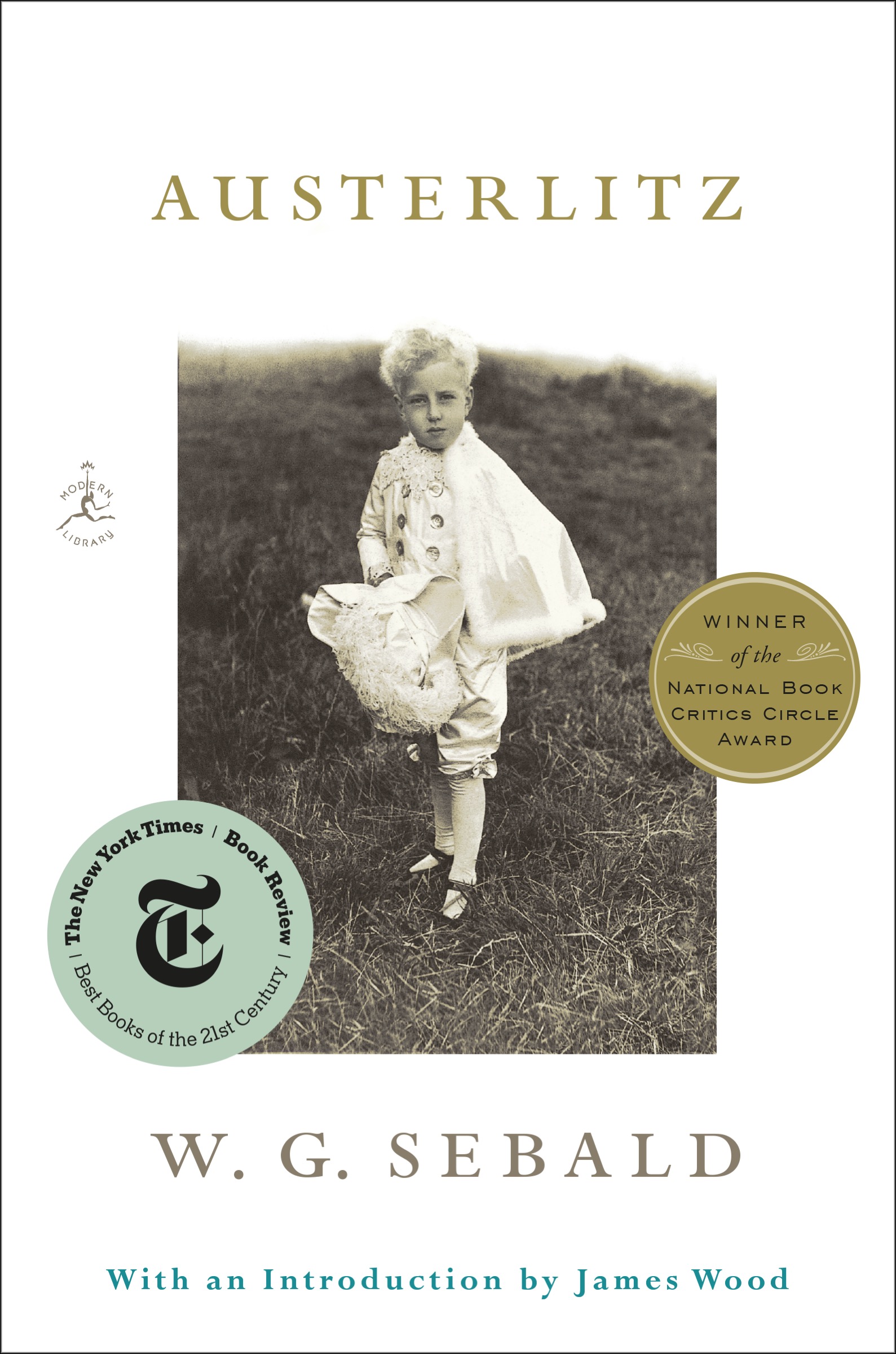
About the book
BOOK SUMMARY
A Holocaust survivor searches for his identity through a thirty-year conversation, uncovering memories of his arrival in England as a child refugee and his quest to understand his heritage.
Published 2001
Historical Fiction
320 pages
The whole style drove me crazy
April 20, 2026
To begin, you should understand that Austerlitz is a highly conceptual and experimental novel. I respect that. I don’t want to sound dismissive just because this isn’t mainstream narrative fiction. I enjoy a Rauschenberg as much as a Rembrandt. But I’m sorry to say that I hated this.
All the intentional stylistic choices meant to create a haunted atmosphere and reflect the themes of fragmented memory mostly just drove me crazy: the lack of paragraphs, the multi-page sentences, the absence of quotation marks, the meandering structure, and the sporadic inclusion of grainy, low-quality images. There is a moving story at the center of the novel — the rescue of thousands of Jewish children during the Holocaust by separating them from their parents — but that story is told in a way that was impossible for me to connect with. Obviously it worked for others.
I’m still giving a couple of stars because I really did appreciate the attempt to explore the intersecting concepts of identity and memory. I respected the addition of something wholly new to the WWII genre. I thought the detailed descriptions of architecture as a representation of history were interesting. But the end product just did not resonate with me at all.
 kelsi’s reading diary