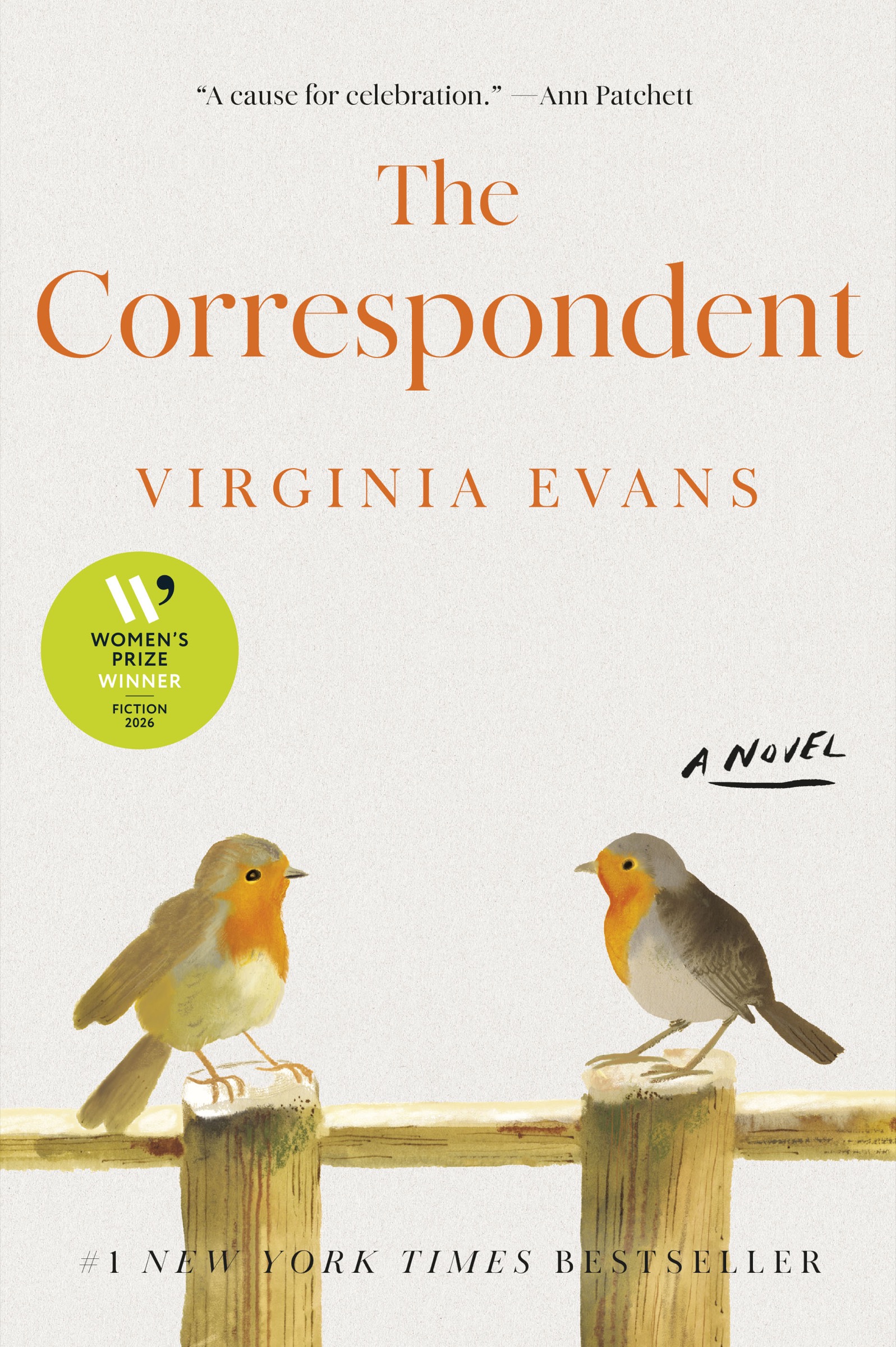
About the book
BOOK SUMMARY
Through letters to various recipients, Sybil Van Antwerp examines her life and confronts a painful past, learning to find forgiveness and move forward.
Published 2025
Contemporary Fiction
304 pages
My perfect book club pick
May 16, 2026
I had a great experience reading The Correspondent. Despite (or maybe because of?) the epistolary format, I felt like I got a surprisingly deep sense of many of the characters. The writing was engaging, even if I did have to suspend my disbelief a little bit that such a varied cast of characters all happened to have a similar high level of letter-writing talent.
What I liked most was the broad range of situations the book explores in such a tidy package, both through Sybil’s own life and through the lives of the people around her. We’re invited to think through everything from the death of a child, infidelity, late-in-life love, complicated parent-child relationships, unresolved family origins, petty community grievances, guilt, aging, disability, mental illness, grief, reconciliation, and the sustaining power of human connection. And, as a bonus, we’re also gifted literary references ranging from Joan Didion to Kazuo Ishiguro to Agatha Christie.
Almost anyone will find something deeply relatable in this book, I think. If that all isn’t perfect book club fodder, I don’t know what is (oh, this is the book I picked for book club you say??) I naturally kept coming up with book club-type discussion questions as I read, such as:
How do you think Sybil’s experience with Dezi and his family earlier in life impacted how she treated Basam, another young immigrant man in difficult circumstances?
Would there be value in seeking out the origins of your adoption at Sybil’s age? And what right do Sybil’s children have to make that decision for her?
What did you think of Sybil’s apologies to Fiona, Rosalie, Dezi, and others throughout the book?
Should Sybil feel guilty about what happened to her son? Was it her responsibility to disclose the truth to her husband and children?
I did not find Sybil to be a particularly endearing character, though I’m not sure she’s meant to be. She is rigid in her ways, and the book strongly hints that she may be autistic in a way that affects her social skills. Her apologies often seemed framed more around her own need for closure or to explain herself than around a full recognition of how she had hurt other people. But her character felt very genuine, and I care more about realism than likability.
What I didn’t love, however, was how neatly and happily everything seemed to be tied together at the end. If we’re going for realism in the characters, I think we should also go for realism in the outcomes. Not everyone forgives. Not every relationship is repaired. And not everyone gets a second or third chance at love. Unlike Larry McMurtry, I don’t think Virginia Evans quite had the courage to let her characters experience a certain kind of lasting pain.
 kelsi’s reading diary