About the book
BOOK SUMMARY
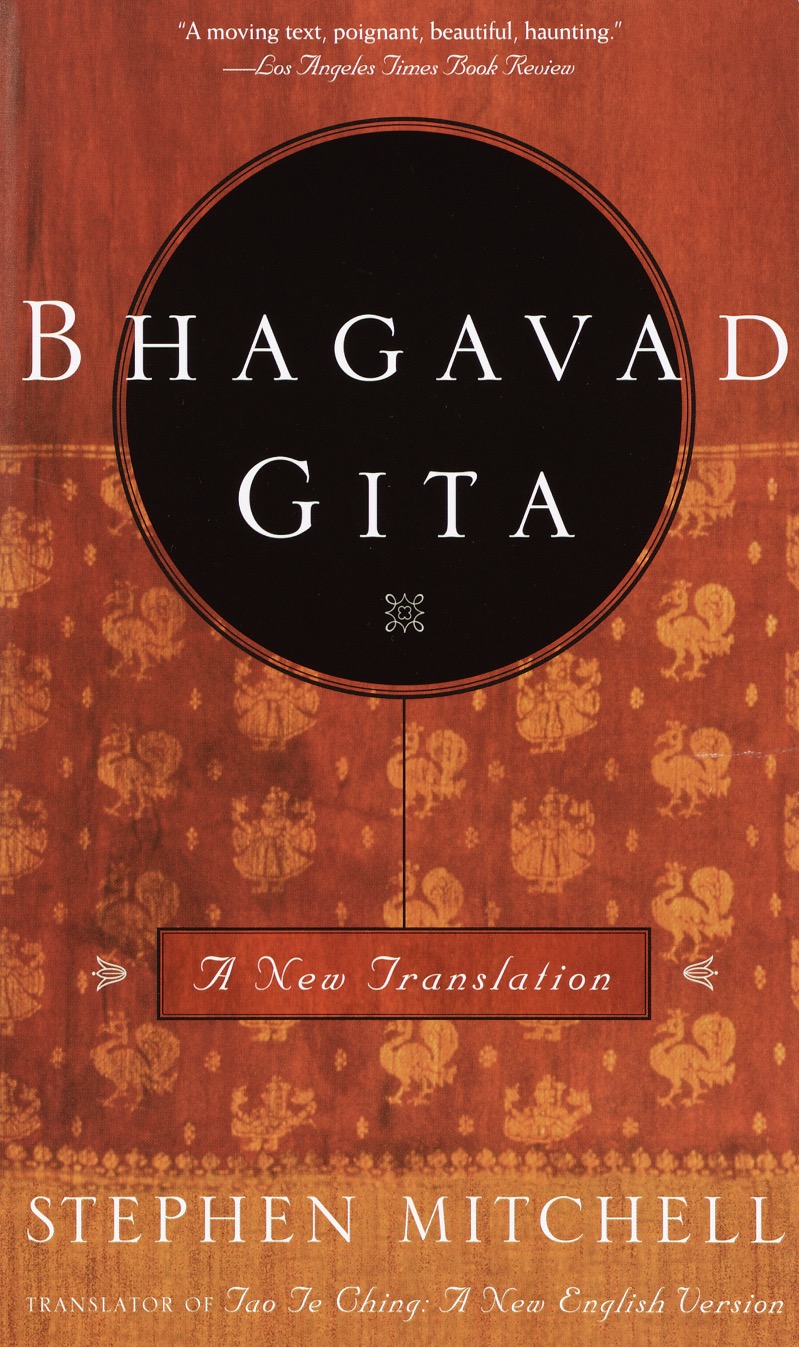
Ancient Hindu text where Lord Krishna counsels Arjuna about duty, karma, and spiritual enlightenment during the Kurukshetra war, offering guidance on living a purposeful life.
Published 100 BCE
Religion
221 pages
Beautiful writing, troubling battle pep talk
May 19, 2026
My initial naive reading of the Bhagavad Gita (a Hindu text) is that it sounds kind of like the Christian God preaching Buddhism. You have this supreme being, Krishna, claiming to be “the beginning, middle, and end of all beings” and saying that even the “vilest sinners” can be redeemed if they choose to worship him. That sounds pretty familiar from a Christian perspective: God as creator, judge, refuge, and savior. But then Krishna is also talking about how craving and attachment lead to grief, anger, delusion, and sin, which sounds a lot like Buddhism.
Of course, there are some important nuances. Krishna isn’t totally like the Christian God, because in Christianity, God creates the world but remains distinct from it. In the Gita, Krishna sort of is the world. And Krishna isn’t totally preaching Buddhism, either. The Buddha teaches that you need to let go because there is no permanent self to cling to. Krishna, on the other hand, teaches that you need to let go because your true self is eternal and you should be seeking union with the divine.
I can see why some people view the Gita as somewhat problematic, though. Krishna gives this whole monologue to Arjuna right as Arjuna is having some moral hesitations about leading this giant battle against his own relatives, teachers, and friends. And Krishna basically assuages his concerns by telling him to fight anyway because it’s his duty, because death is inevitable, and because the eternal self can’t really be killed. Which could obviously become a very dangerous line of thinking used to wrongly justify violence if someone decides their cause is righteous enough.
But I’m going to go with the more generous interpretation of the war as at least partly an allegory for internal conflict. It helps that the Gita feels somewhat self-contained, even though it is embedded in the much larger Mahabharata, where the whole war scene gives it its immediate context. The writing is too lovely for me to accept that the message is so ambivalent toward violence.
 kelsi’s reading diary