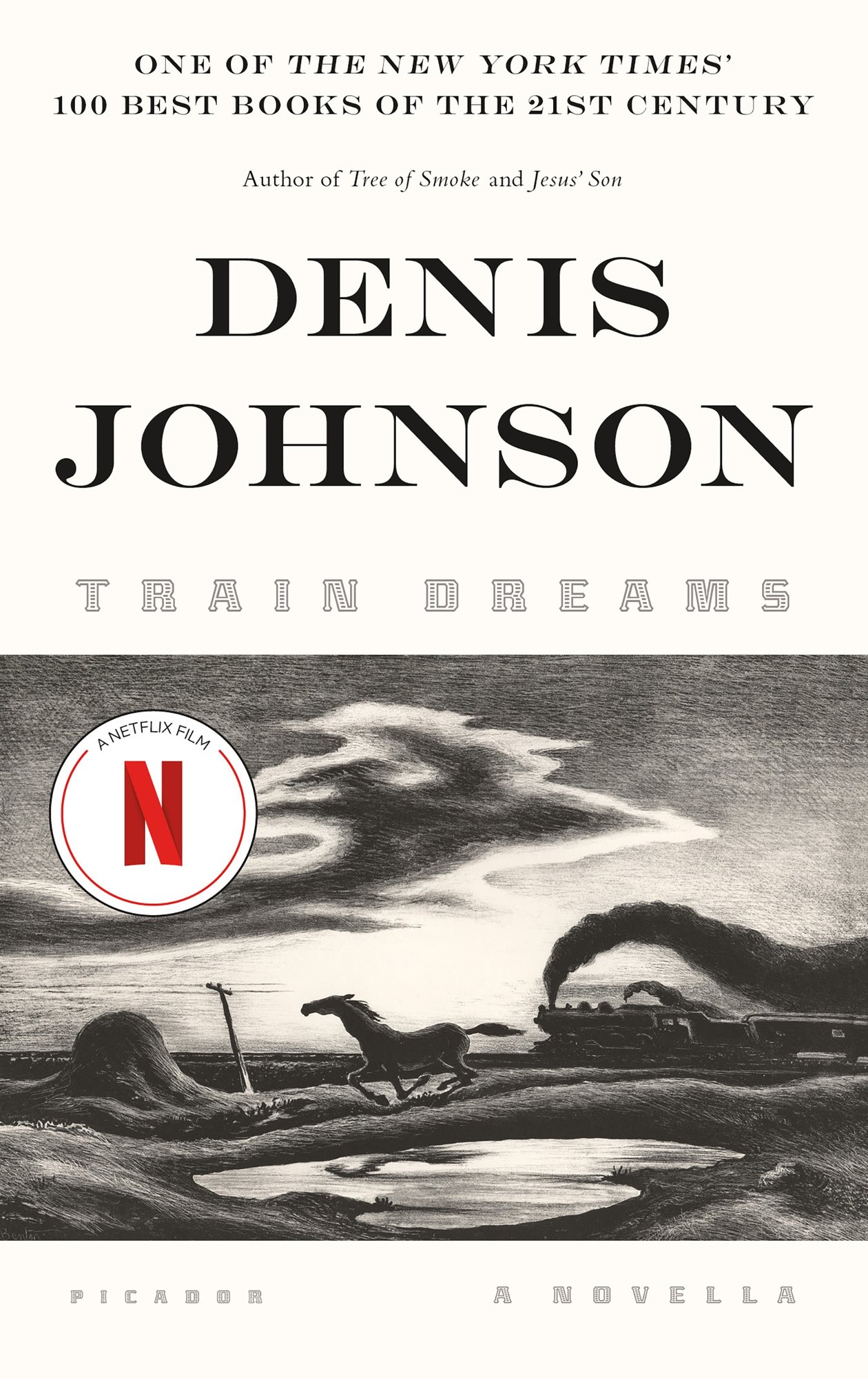
About the book
BOOK SUMMARY
In early twentieth-century American West, day laborer Robert Grainer faces personal losses while witnessing America’s transformation amid rugged landscapes of loggers and bridge builders.
Published 2011
Literary Fiction
128 pages
The movie made me appreciate the book more
May 24, 2026
First I read the book. I thought it was a sad, bleak story about a sad, passive man in a changing world. Then I saw the movie. Watching the movie was a more enjoyable experience than reading the book, but it actually made me appreciate the book more for what it was.
Grainier is much easier to root for in the movie. He comes across as a simple, hardworking family man plagued by tragedy beyond his control. In the book, he is still hardworking and sympathetic in some ways, but he also feels much more apathetic and morally ambiguous. He is more clearly complicit in events like the attempted murder of the Chinese railroad worker at the beginning, and the book does not work very hard to make him seem noble. We also get very little time with him and his family, so his grief feels much less sentimental. The movie gives the story a clearer narrative arc, while the book feels more like a series of linked anecdotes.
The movie also leaves out or softens some of the book’s darker elements, like the scene where a young Grainier listens to a dying man’s horrifying confession. The book has a much more supernatural, haunted feeling, and Grainier’s fear that something bad is following him seems more tied to his own guilt and complicity than to fate alone. By the end of the movie, Grainier seems to have found some kind of peace. In the book, it feels more like he just keeps living, drifts through time, and eventually dies.
So both the book and the movie effectively convey grief, tragedy, and the sense of a world changing and passing people by. But the movie is more hopeful and ends on a somewhat positive note. The book is much harsher, and by the end, I wasn’t as sure what to think of it. It seems like a better representation of the apathy, damage, and moral ambiguity that characterized a lot of Johnson’s own life, at least from what I’ve read, so I wonder what he would have thought of the movie.
 kelsi’s reading diary