About the book
BOOK SUMMARY
A captivating tale following the romantic exploits and artistic pursuits of an ideal courtier in ancient Japan.
Published Early 11th Century
Narrative Fiction
1360 pages
I wanted Murasaki’s story
June 20, 2026
After making my way through a couple dozen ancient texts originating from all over the world this year, I found myself craving a female perspective. So I was excited to learn that the book considered by many to be the world’s first novel, The Tale of Genji, was actually written by a woman.
The length alone makes The Tale of Genji an incredibly daunting read. Of all the novels on my shelves, only War and Peace and Les Misérables are longer by page count, and Genji is still several hours longer by audiobook listening time. On top of that, the cast of characters is endless, the names and titles shift constantly, and I was entering into a culture I had very little familiarity with.
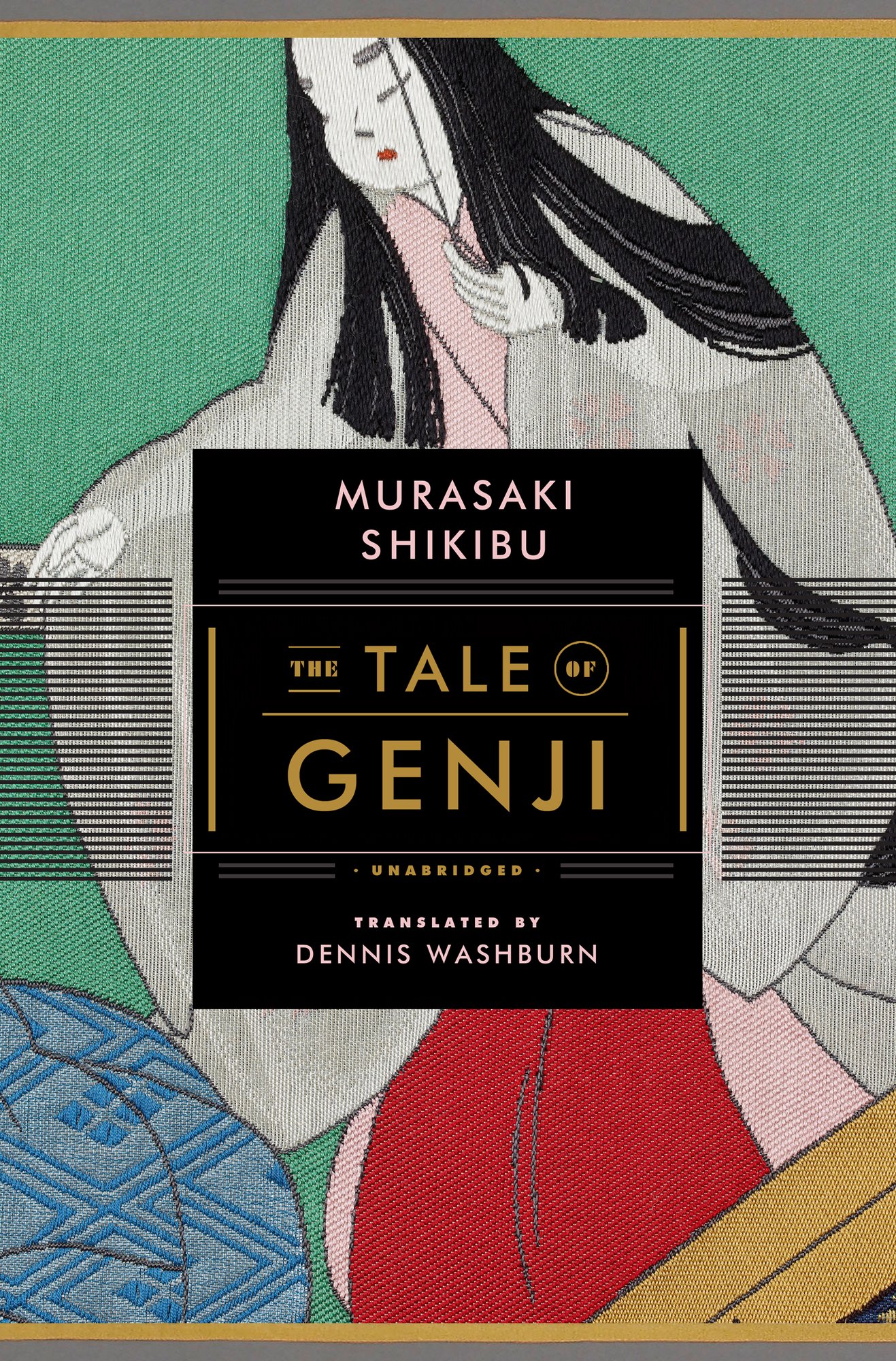
I read the Dennis Washburn translation, which I found surprisingly clear and readable. The writing could be quite beautiful; however, I am always curious when reading translated works, especially works attempting to bridge worlds as distant as mine and Genji’s, how much of what I’m reading belongs to the translator and how much belongs to the original author. I could tell Washburn was doing a lot of explaining within the text itself, because he often had to clarify details that I imagine would have been obvious to a contemporary reader.
The story follows the life of Hikaru Genji, the dazzling son of an emperor, as he moves through the highly refined and rule-bound world of the Heian court. The second part of the book moves on from Genji, and we follow one of Genji’s (adopted) sons, as he pursues a very similar lifestyle to his father. In a lot of ways, this second part felt like a completely different book and I could have done without it. But that’s probably just because I was getting a little tired of the whole sage once I was about 800 pages in.
It is an impressive work of literature, even just for the level of detail it contains. I took a lot of notes as I read and/or listened, and I have a LOT to say about this one.
Going in with the hopes of hearing a woman’s perspective, I came out pretty disappointed. To be clear, I wasn’t expecting some modern feminist worldview. All I wanted was a little more insight into how women felt about their position in the world and how they were treated. I did not feel like this book gave that to me in the way I wanted.
The overwhelming focus of the story is on Genji’s romantic life, and it is very sympathetic to Genji’s point of view. We do get some insight into how women feel about their various interactions with him, but the story is still orbiting Genji. The narrative constantly praises his refinement and honorable nature, even while showing him doing things that are, to put it mildly, not honorable. When Genji makes the same mistakes over and over again, all he has to do is feel a little bit bad about it, compose a beautiful poem, and somehow the mood shifts back toward pitying him.
Meanwhile, we don’t get nearly enough sustained insight into the women. I kept wondering what Murasaki Shikibu actually thought of all this. Did she actually think Genji was a wonderful character? Because maybe this does give me the women’s perspective I need, just not in the way I wanted. Maybe their only perspective is that they were not allowed to have much of a perspective. They live quietly behind screens and curtains, dependent on letters, visits, reputation, timing, and male attention. Their minimal power is fragile and often completely at the mercy of whether a man keeps showing up.
Still, I wanted so badly for the book to turn its focus away from Genji and stay with one of the women instead. I wanted Murasaki’s story. Or Fujitsubo’s. Or the Akashi Lady’s. Or the Third Princess’s. What were their lives like outside of Genji’s orbit? What did they think when no one was watching? Did they want anything out of life besides survival and dignity?
I feel confident that Genji would have been a complete incel if his timeline was shifted to the 21st century, but in The Tale of Genji, he is the ultimate prize. Basically, more than one thousand years before Donald J. Trump put the principle into words, Genji had already perfected it: “When you’re a star, they let you do it.”
I’m not even talking about the things that bother me only because I’m reading with a modern mindset. I can accept that the court world of the book allowed powerful men to have multiple romantic partners, wives, and quasi-wives, and that the men were the ones who held all official power and authority. I’m more confused by the things that even people within the world of the book seem unsettled by: taking a ten-year-old girl into his household so he can eventually shape her into his ideal wife, forcing himself on women who are resisting him, pursuing women whose situations make refusal nearly impossible, and then being treated as though his real flaw is that he feels too deeply.
I think the only way I can sufficiently convey the extreme creep factor of Genji’s character is by breaking down all of the lovers he accrues over the course of the book, and how non-consensual almost every single one of them was at the beginning (with quotes!). Luckily for Genji, pretty much all the women end up falling in love and being the luckiest girls in the world to have even a little bit of Genji’s attention. Here they are:
Aoi
– First wife. Conjugated the marriage when he was twelve and she was sixteen. She was not excited about it, but he wasn’t really either.
“[Aoi], who at sixteen was four years older than her husband, was put off by Genji’s youthfulness and considered their match inappropriate.”
— (Page 20)
Lady Fujitsubo
– First obsession, starting when he was a child. Consort of Genji’s father. Acts as Genji’s stepmother. Seven years his senior. He tracks her down when she goes away for health reasons. He forces himself on her despite her resistance and she feels terrified and ashamed. It turns into a long-term relationship and she bears him a son.
Rokujo Lady
– Older, high-ranking widow. Seems to be one of Genji’s more consensual relationships, but I don’t think we get insight into how it started. She ends up being very jealous of Genji’s other romances and supposedly possessing multiple other lovers of Genji.
Utsusemi
– Genji repeatedly stalks and attempts forced intimacy before he is successful. She is already married and actively evades Genji. Becomes a long-term relationship.
“The lady was now genuinely unhappy and found it unspeakably base that he had selfishly forced himself upon her. After it was over, he was moved to pity by her weeping. Although it pained him to see her in this state, he would have regretted it had he not taken her. Still, it was annoying that she should be unconsolable.
— (Page 47)
Utsusemi’s Brother
– The text seems to suggest that Genji took advantage of Utsusemi’s brother on one occasion when he couldn’t get his hands on Utsusemi?
“Genji had the boy lie down beside him. It is said that because Genji’s splendid, youthful appearance delighted the boy, he found the lad far more lovable than his frigid sister.”
— (Page 53)
Utsusemi’s Sister
– Genji also hooks up with Utsusemi’s sister after Utsusemi sneaks away and he finds himself with the wrong woman. She mostly seems shocked and confused.
“The young woman finally woke up, and though she was startled and dismayed at this unexpected visit, she also gave no indication that should resist him.”
— (Page 58)
Yugao
– Doesn’t actively resist Genji, but there is a definite power imbalance. Genji is explicitly attracted to how passive, helpless, and childish she is, like how she is scared of the dark. She dies of supposed possession by the Rokujo lady after their interaction
“‘Her frailty made her precious to me,’ Genji declared. ‘I don’t care much for women who are clever and learned and won’t do what they’re told. By nature I’m not very good at being responsible, about looking after every last detail, so I prefer a woman who is soft and gentle.’”
— (Page 89)
Murasaki
– This one is the real doozy. The supposed love of Genji’s life. He first sees her when she is 10 and he’s nineteen. He loves her because she reminds him of Fujitsubo and thinks he can mold her into the perfect woman. Her guardians think she is too young, so he kidnaps her anyway and brings her to live with him. And she is basically isolated and groomed from that point on with Genji acting as both a father-figure and romantic partner. She is trained not to be jealous or ever question Genji’s motives.
“‘Here you are, already past your tenth birthday, and you’re still playing with these dolls. It just won’t do. You have a husband now, and you really must start behaving more like a proper wife and looking more like a lady for him.’”
— (Page 156)
– That poor girl!
“Murasaki was still lying face down. She pulled the bedding up over her face so that she would not have to look at him.”
— (Page 211)
– Murasaki’s reaction to Genji sleeping with her for the first time. This whole scene is horrifying, including Genji shaming her for making him feel bad about it.
The Hitachi Princess
– Innocent and old-fashioned princess. Genji treats her like an experiment because he thinks she is so strange and ugly. He is incredibly mean throughout the book with how he describes her, but keeps her as one of his long-term relationships largely out of pity.
“The second thing that immediately caught his eye was her nose. It was so hideous he couldn’t keep his eyes off it.”
— (Page 141)
Naishi
– I thought this one was both funny and mean. Genji and his friend To no Chujo both try to hook up with this sixty year old woman. It’s mean because they’re kind of messing with her as a joke, but funny because Naishi seems like one of the few characters to actually have a personality.
“When it came to affairs with men she tended, in spite of her age, to be outrageously flirtatious and utterly frivolous. Genji was curious as to how a woman so past her prime could be so lustful, but when he casually bantered and teased with her, he was shocked that she did not think his proposition strange or inappropriate.”
— (Page 164)
Oborozukiyo
– A married woman from an opposing political faction. His nonconsensual hookup with her gets him exiled for a while. Continues as a long-term relationship.
“Her shock and dismay at his forward behavior gave her an allure he found incredibly attractive… Genji, however, was unconcerned. ‘It won’t do you a bit of good to call for someone,’ he assured her, ‘since everybody yields to me. So do be quiet.’”
— (Page 174)
The Akashi Lady
– Genji meets and impregnates her during his exile. Relatively consensual, not that the Akashi Lady has much power to say no in the first place, because her dad’s whole thing was that if she didn’t marry well before he died, then she had to throw herself into the ocean.
The Third Princess
– An arranged marriage that occurs when Genji is 40 and she is 13. She is later assaulted and impregnated by Kashiwagi, a rival of Genji, and seems to have to carry most of the blame for the incident.
“Kashiwagi had written eloquently of how he had finally realized his greatest desire after many years of longing for the third princess and of how much he had suffered since they had consummated the affair.”
— (Page 747)
– See how the men are always playing the victim?
So those are some examples of Genji being an asshole. I don’t even think I got them all. I didn’t even talk about his creepy as hell relationship with his fake daughter, or how the next generation of men portrayed in the second part of the book might be even worse. But you get the idea.
I’m not surprised that someone like Genji would behave this way, I guess I’m just surprised he was continuously praised as admirable and honorable.
Beyond all of Genji’s affairs, I was fascinated by the incredibly detailed view into the strict hierarchical and cultural framework that shaped the lives of a very privileged slice of society during this time period. I felt like I learned a lot, and there were several cultural elements that stood out in particular.
First, the focus on refined poetry, music, and art. A lot of communication between the characters is done through written poetry. Genji’s attraction to women seems to be largely dependent on not only how well they can compose poetry, but also on how impressive their presentation is, including their handwriting, the color and material of their stationary, the mode of delivery, and even the scent of the page. Also, everyone knows how to play the koto, and their skill in doing so seems to be a significant factor in their overall worth as a person.
Relatedly, I was amused by the unique beauty standards that prevailed for both men and women. An attractive woman is meek, submissive, and artistically skilled. Physically, she is petite, has incredibly long hair, a round face, a white face, black teeth, shaved eyebrows, and dresses suitable for the season and occasion. And an attractive man seems to be one who exhibits similar feminine characteristics of beauty and refinement. In fact, there were multiple passages that made statements about a man being so beautiful that they would have made a good wife if they had been a woman.
I also kept being reminded from the text that the highest-ranking women are like, never even seen by anyone besides female staff. Genji or some other character will be pining for a woman, and then there will be some off-hand remark about how he can’t wait to actually see her. The women don’t ever seem to leave the house, they are always behind walls or curtains, and they are constantly covered with layers of robes and makeup. Even hearing a woman’s voice seems to be something that is worked up to, after you’ve taken the step of communicating through written poetry delivered by page girls and boys.
Another interesting aspect is the amount of and consideration given into what is lucky or unlucky. You don’t want to be too perfect or handsome, because that might mean bad things for the future. Age 37 for a woman is something to be cautious about. You don’t want to wash your hair in the eleventh or twelfth months. You should avoid birth and death happening in your house. Men can’t see a newborn until a certain amount of time has passed and the appropriate purification ceremonies have taken place. It seems like an endless amount of superstitions to keep track of.
Similarly, the characters spend way too much time worrying about what other people will think or how their actions will be perceived. They end up making some terrible choices at times as a result. I got so tired of everyone’s rationale for things being, “just imagine what people will think!”
Oh, and everyone seems to like taking religious vows near the end of their life. Genji seems to talk about it constantly, even as he’s still out philandering with women, and women seem to take vows as a way to escape their obligations with men.
Finally, I could not stop thinking how so many of Genji’s problems would not exist if he had something actually productive to do with his time. Like, bro, get a job. Stop constantly thinking about yourself. Go see how the other half lives. It’s a mystery to me how these imperial court systems were able to remain in force for so long when everyone seemed to just be going around creating drama for themselves like they were living carefree on Love Island.
 kelsi’s reading diary