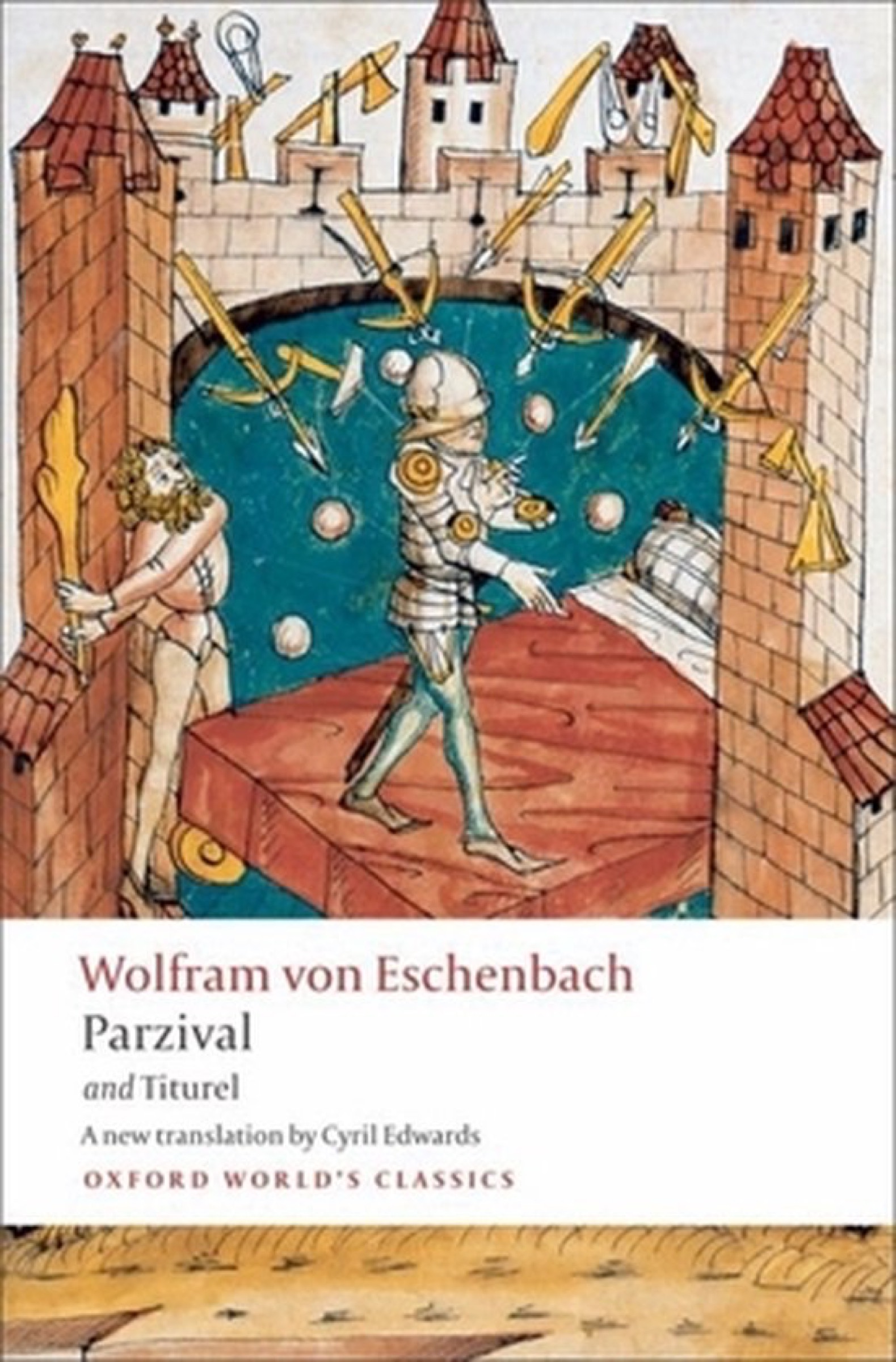
About the book
BOOK SUMMARY
A young knight’s quest for the Holy Grail becomes a profound journey of moral and spiritual self-discovery.
Published Early 13th Century
Epic Poem
415 pages
I was bored, if I’m being honest
July 22, 2026
I’ll be honest, I struggled to stay focused on this one, and I’ve been reading a fair amount of ancient and medieval literature lately. I’m not sure whether Parzival is particularly challenging, whether the story just didn’t resonate with me, or whether I’m just burned out on the genre, but this wasn’t a favorite.
The novel opens with Parzival’s father, Gahmuret, establishing the family lineage before shifting to Parzival’s upbringing. This first section after Parzival leaves home was easily the most entertaining for me. Parzival starts out as a naive, well-meaning fool, frequently quoting “what mamma said” and stumbling into situations he doesn’t understand. He gave me major Bobby Boucher-from-The Waterboy vibes.
As the story progresses, Parzival gradually grows into a legitimate knight, and the novel follows both his journey and the parallel adventures of his friend and fellow knight, Gawan. Together, they move through many of the episodes that became foundational to Arthurian legend and the Holy Grail tradition.
The thought I kept coming back to throughout the book was how absurd so much of the chivalric code feels. These knights claim they’re devoting themselves to protecting and serving women, but they mostly seem interested in chasing glory and entertaining themselves with one adventure after another. Meanwhile, women like Parzival’s wife, Condwiramurs, and his mother, Herzeloyde, are left wanting husbands and fathers who are actually present. It ends up feeling surprisingly relevant to certain modern ideas of masculinity, where some men imagine that being a hero means doing grand, impressive things for women instead of simply being the kind of partner women actually want.
 kelsi’s reading diary