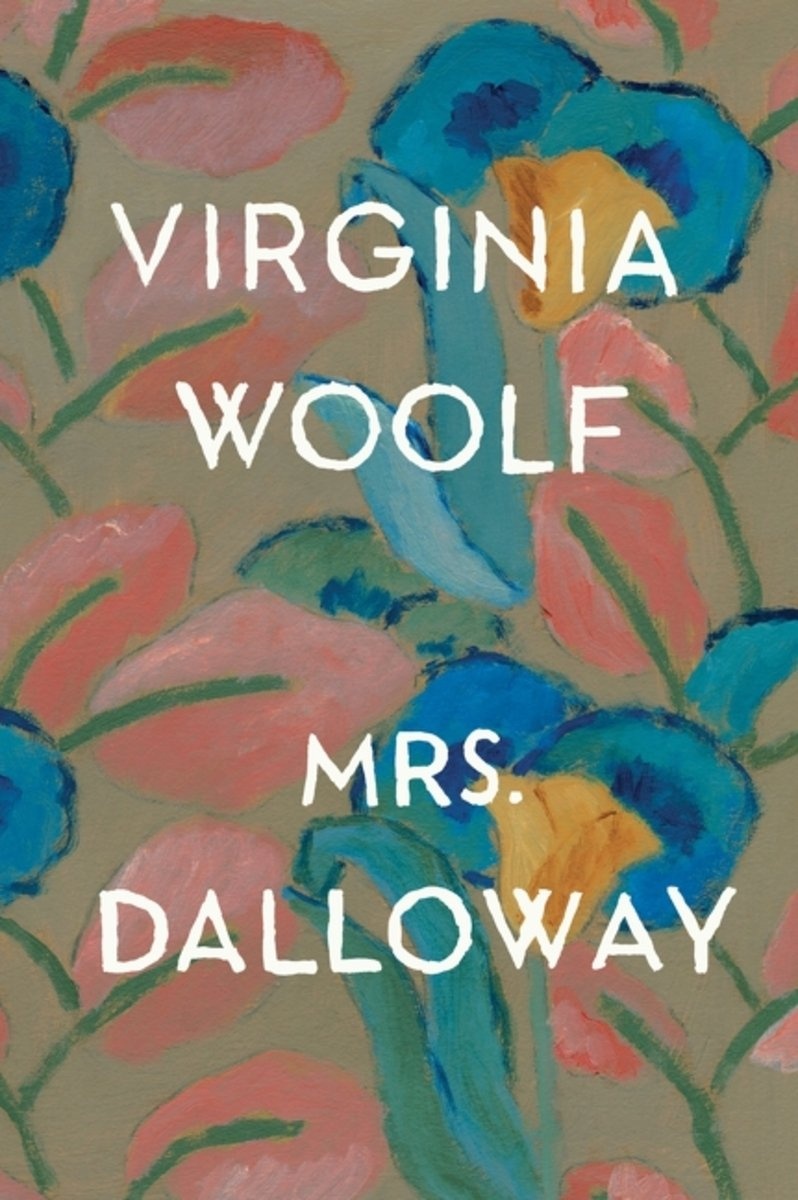
About the book
BOOK SUMMARY
Over the course of a single day, a woman prepares for a party in postwar London while reflecting on her life and a traumatized veteran struggles with the aftermath of war.
Published 1925
Literary Fiction
224 pages
This had me thinking about so much
August 6, 2026
I was almost hoping that I wouldn’t enjoy this book, because for some reason, in my mind, being a Virginia Woolf fan is peak pretentiousness. But it turns out I did like it very much.
First of all, I’m incredibly impressed by Woolf’s insightful and nuanced treatment of both sexuality and mental health. For a novel published in 1925, the way she approaches both topics feels very ahead of its time.
The glimpses we get of Clarissa’s early relationships with Sally and Peter feel so modern, especially in the way Woolf presents sexuality as something subtle and not always easily defined. Clarissa’s feelings for Sally are treated as something significant without Woolf ever actually categorizing them.
Her portrayal of depression and what we would now recognize as post-traumatic stress is just as perceptive. Because we are actually able to get inside Septimus’s head, we understand the reality of what he is experiencing even when the people around him do not. At the same time, we also hear from his wife and his doctors, who either struggle to understand him or are convinced that nothing is seriously wrong.
Speaking of Septimus, I can’t believe how little he is emphasized in most descriptions or summaries of this book. To me, he is the star of the show. He is at least as important to the novel as Clarissa herself. As I read more about Woolf’s life, it made complete sense to learn that she thought of Clarissa and Septimus as two sides of the same person. Clarissa’s almost obsessive desire to bring people together contrasts well with Septimus becoming increasingly isolated from everyone around him.
One of the things I found most fascinating was the way Woolf presents conversations between characters. We hear the dialogue being spoken, but we also hear what each person is thinking throughout the conversation in real time. It gives us unique insight into how poorly humans actually communicate and how often we misinterpret other people’s words, expressions, and intentions. Two people can be having the same conversation while experiencing it completely differently.
The inner monologues also capture this very specific tendency I think humans have to fixate on certain people and constantly wonder what they think of us, while simultaneously insisting to ourselves that their opinion doesn’t matter. This is especially obvious with Peter and Clarissa. They both think about each other constantly and clearly still care what the other person thinks, but they also spend an enormous amount of time mentally defending themselves against each other.
I also loved how clever and cinematic some of the transitions between inner monologues were. We might be following one character walking down the street, and then that character hears a sound that another character also hears, and suddenly we are inside the second person’s head. Or someone notices a stranger, and the narrative simply follows that stranger away.
I had so many more thoughts about the book, but I’m not sure how to approach them without turning this review into more of a journal entry. Basically, I completely understand why the lack of a traditional plot would not appeal to everyone, but I was fairly enthralled by the concept of hopping around between all these different people’s heads. It sent me down a whole rabbit hole of wondering how other people think. The book made sense to me because I spend a lot of time in my own head, and I often find myself going on internal adventures that have no apparent purpose. I’ll see something in the world that reminds me of some long-ago event in my life, which I’ll then connect to a book or a historical event or another person, which somehow turns into thinking about the grander scale of existence, and the next thing I know I’m drafting an entire philosophical essay in my mind as if I can actually see the words being typed and revised as I go. I talked to my husband about this, and it sounds like he does not experience his internal world in quite the same way. He might spend time thinking about a recent conversation or an upcoming task, but his thoughts seem to stay in a more practical realm. My thoughts obviously dwell on practical things too, but that feels entirely different to me from thinking for its own sake.
Which brings me back to the book. I wonder if the appeal of Mrs. Dalloway, or maybe stream-of-consciousness literature in general, is partly dependent on how the reader’s own brain operates. If you are not naturally entertained by following your own thoughts wherever they happen to go, I can imagine that reading pages and pages of someone else doing the same thing would not be a pleasant experience.
 kelsi’s reading diary