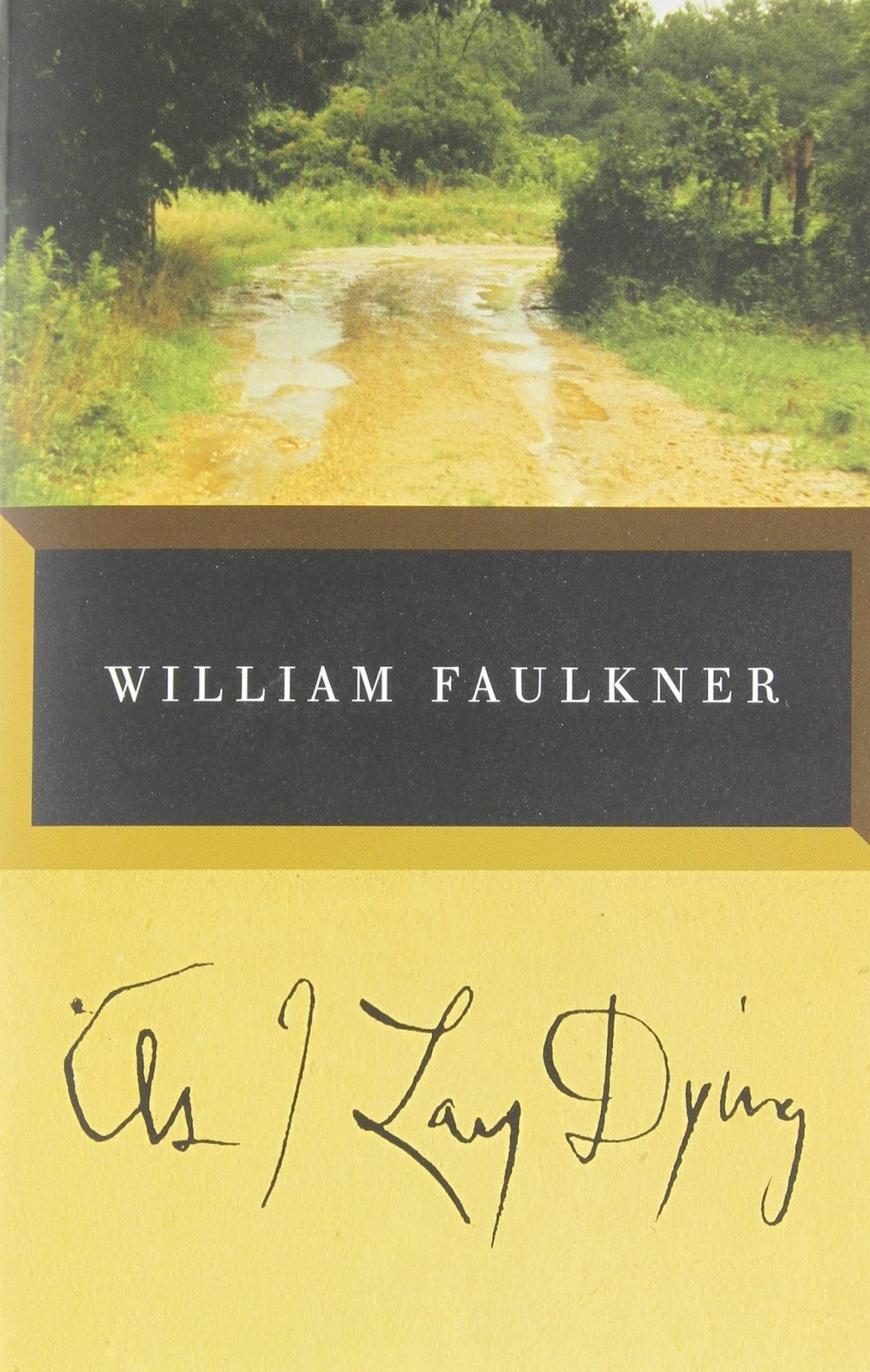
About the book
BOOK SUMMARY
The Bundren family journeys to fulfill matriarch Addie's dying wish to be buried in Jefferson, facing drowning mules, a barn fire, and Darl's descent into madness.
Published 1930
Literary Fiction
267 pages
Anse is the absolute worst
August 11, 2026
This would have been a much more welcoming introduction to Faulkner for me than The Sound and the Fury. It still jumps between fifteen narrators, but each chapter is labeled with the narrator’s name, and we generally know where we are in the timeline, so the story is a lot easier to follow. I think I liked The Sound and the Fury better overall, but this one was also very good.
The strongest takeaway I had walking away from As I Lay Dying is that Faulkner knows how to write characters I hate viscerally, from the depths of my heart, better than anyone else I’ve read. In The Sound and the Fury, it was Jason; here, it’s Anse. What makes these characters so hateable isn’t that they commit some obviously monstrous act of violence. It’s that they feel like the kind of awful people you could easily imagine walking around in the real world. They enact more insidious forms of cruelty, like betrayal, dishonesty, hypocrisy, selfishness, and exploitation.
And while Anse is just the absolute worst, Addie also seems pretty evil in her own right, with a very twisted view of the world. It’s interesting, though, how Anse and Addie seem to have completely opposite value systems. Anse is constantly spewing bullshit about duty and sacrifice and honoring his wife, while his actions are nothing but selfish. Meanwhile, Addie believes words are meaningless without action. Ideally, action that comes with pain.
With these two at the head of the Bundren household, the parent-child relationships became the most interesting part of the book for me. The family dynamics actually fit with a theory I have that the most unconditional love in the world may not be the love a parent has for a child, but the love a child has for a parent. A child comes into the world with no knowledge of life without their parents, whereas a parent can see exactly how much the child has changed their life, for better or worse. Children are raised to understand the world through their parents and are basically hardwired to want to be loved and seen by them. So even when they are mistreated or something feels deeply wrong in the relationship, there can still be this innate desire to repair the connection. Generally. At least that’s my theory.
So it’s interesting to watch all five kids make repeated sacrifices for their parents, through varying combinations of love and obligation, despite the fact that neither parent seems to have shown them much care or compassion. Cash builds his mother’s coffin and then endures the journey with a badly broken leg. Jewel sacrifices his prized horse. Dewey Dell puts her own enormous personal crisis on the back burner while the family drags Addie across Mississippi. And Vardaman, with his completely bewildered child’s view of death, drills holes in his mother’s coffin so she can breathe. Even Darl, for all the complicated reasons behind his actions, stays caught up in the family’s insane mission until it completely destroys him. They have a pair of despicable parents, but none of the five children seem like bad people. Ignorant and foolish, perhaps, but not bad. It’s hard not to feel extremely sympathetic toward all of them.
Darl deserves his own paragraph, because he was such an interesting representation of what it means to be sane in an insane world. He’s the most articulate of the Bundrens and seems the most capable of recognizing the absurdity of what they’re trying to accomplish with this whole body-transport situation. The irony is that he ultimately becomes the one labeled insane. And I can absolutely see the real-life relatability in that. There is a lot that society treats as normal, from disingenuous small talk to rampant waste and consumerism to spending most of our lives serving corporations, that can feel a little bit crazy when you actually stop and think about it. But if you refuse too strongly to go along with those norms, you might end up being the one perceived as crazy.
Lastly, the other thing that really stood out to me, and worked especially well with the stream-of-consciousness style, is how disconnected everyone in the family is despite being together on this same insane journey. They are all consumed by their own secrets, motives, resentments, and private interpretations of what is happening, but they rarely communicate any of it to one another. They are physically together the entire time while remaining almost completely isolated from each other.
And that ending, man. Really puts a cherry on top of what an asshole Anse is.
 kelsi’s reading diary