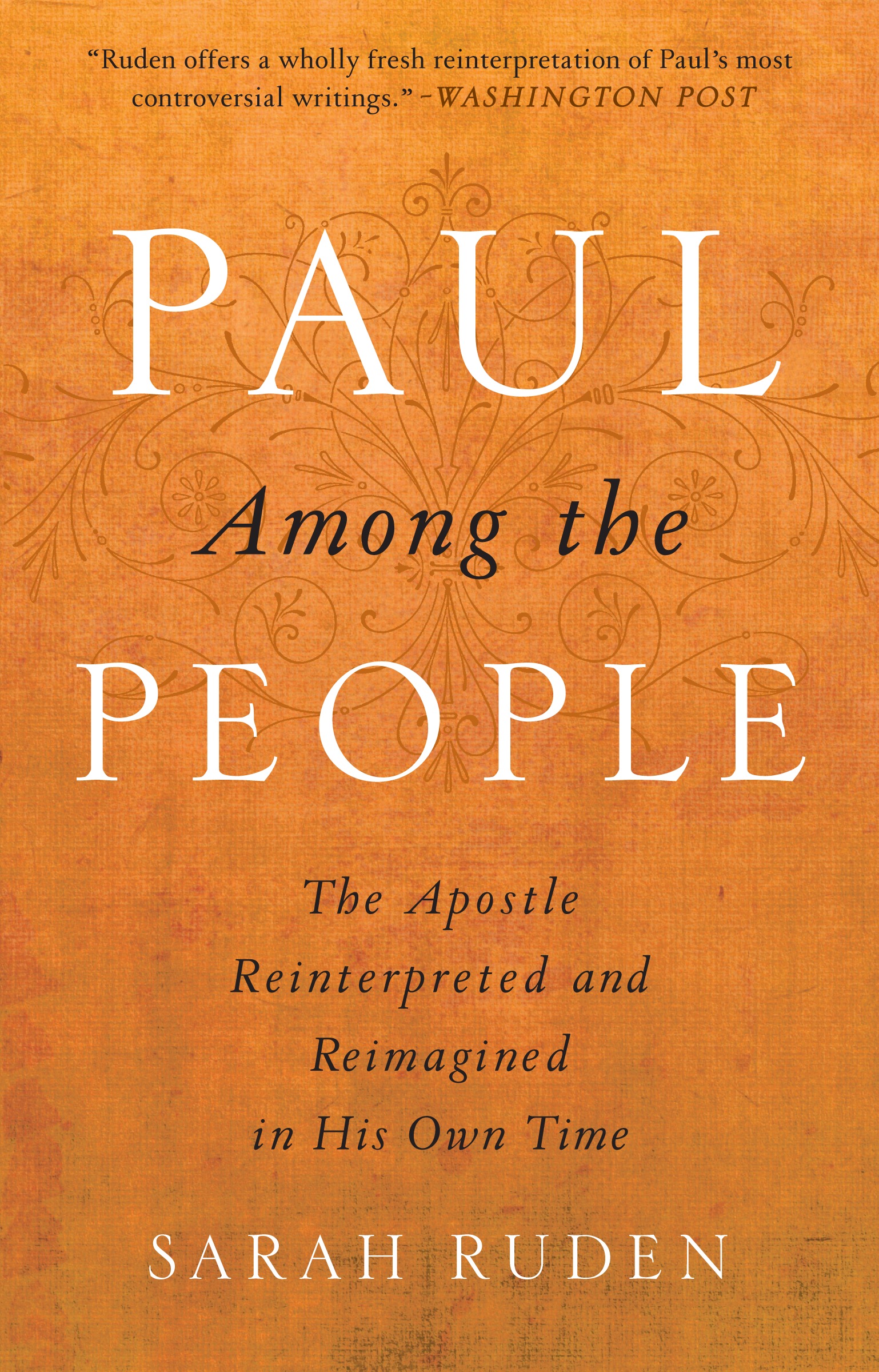
About the book
BOOK SUMMARY
A scholarly analysis examining the Apostle Paul’s writings in their original Greco-Roman context, revealing his revolutionary message of spiritual equality, human freedom, and universal divine love.
Published 2010
History
240 pages
A niche page turner about Paul
May 13, 2026
I read this book after finishing the New Testament because I wanted more historical context, and it ended up being my most enlightening read of the year so far. There is probably only a very niche group of people who would call it a real page-turner, but I am in that group.
The book is organized around some of the most controversial topics Paul addresses in his letters, including women, homosexuality, pleasure, slavery, and obedience to the state. For each topic, Ruden provides historical context for Paul’s statements, compares them with excerpts from contemporary texts of the time, and explains how translation choices or more general shifts in our use of language may have distorted modern understanding.
Ruden does a great job showing that Paul’s reputation for being anti-pleasure and obsessed with purity may have more to do with later, more Puritanical interpretations than with Paul himself. When you view him in the broader Greek and Roman culture from which he was writing, it’s easier to understand that he is mostly just arguing for a basic level of human decency that would be difficult to see as controversial in today’s time.
Ruden focuses on a handful of key verses from the seven epistles that are attributed to Paul with little or no scholarly doubt: Romans, 1 & 2 Corinthians, Galatians, Philippians, 1 Thessalonians, and Philemon (the other six Pauline letters have disputed authorship).
It’s not a very long book, less than 200 pages, so it’s really worth checking out the whole thing. But I’ll highlight a few of the sections I found especially fascinating.
In Galatians 5, Paul gives a long list of things to avoid: adultery, fornication, uncleanness, witchcraft, etc. Ruden spends time with each item on the list, explaining what was happening in Paul’s world that may have led him to call out those things specifically.
On fornication, for example, she explains that Paul uses the Greek word porneia, which is often closer to “prostitution” or “whoring” than to our modern, broader idea of “sexual immorality.” From there, she goes into some very disturbing detail about the brutality of the prostitution in the ancient world and the abuse and exploitation of sex slaves. Her argument is that this abusive use of other people as objects is likely what Paul had in mind when he condemned porneia, not the broader range of activities we now associate with fornication. To be clear, Ruden does not claim this means Paul would have approved of the modern interpretation of fornication, just that this probably was not the main thing Paul was talking about.
Later, she addresses the verses in the first chapter of Romans about “men committing shameless acts with men.” She points out that Paul actually uses the word for “males,” rather than the word for “men.” She then explains that Paul was likely referring to a culture in which adult men sexually abused young boys, often as an expression of pleasure, power, or status. And it sounds like this was a shockingly serious and widespread problem. Ruden’s argument is that sex between males in Paul’s world was not generally understood, at least publicly, as a mutual or loving act between equals. It was often viewed as the degradation or abuse of one person by another. Again, she does not try to make a sweeping claim about what Paul would have thought of modern sexuality. She is arguing that the thing he was condemning was probably quite different from what many modern readers assume.
Some chapters are less satisfying, mostly because Ruden does not always leave us with the version of Paul we might want. On slavery, for example, he comes across as somewhat ambivalent in one sense, but also shockingly kind and generous in another. And I’m still not sure what to think when it comes to Paul’s views on obedience to the state.
Anyway, there are a million other interesting tidbits. Worth reading if you’re a Christian, because, as Ruden says, “The evidence is strong that the full Christian doctrine came not from Jesus’ mouth but from Paul’s pen.”
 kelsi’s reading diary